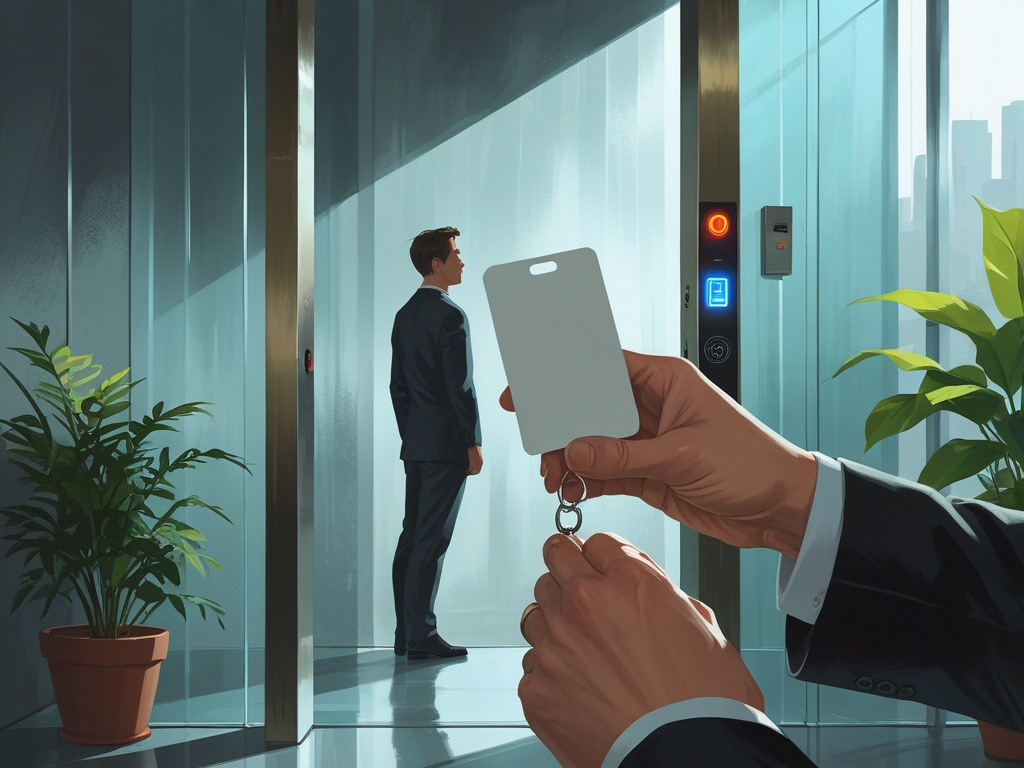
Office badge security sounds old-school until you look at how many modern incidents still begin with someone being trusted too easily at the door.
A visitor follows an employee through a secured entrance because nobody wants to seem rude. A contractor keeps using an old badge for weeks after the project ends. A front desk improvises a check-in process during a busy morning. A side door gets propped open for deliveries. None of that looks like advanced cyber risk in the moment, but it often creates the opening that makes later device theft, unauthorized access, and workflow abuse much easier.
That is why office badge security still deserves attention in 2026. Small teams now spend a lot of time on SaaS permissions, MFA, and browser hygiene, but the physical layer still shapes who can reach laptops, meeting rooms, whiteboards, printers, network closets, unattended phones, and support staff.
Key Takeaway: Badge systems do not fail only because the technology is weak. They fail because the workflow around visitors, employees, contractors, and everyday convenience is too loose.
Why this matters more now
Many offices are less controlled than they look.
A growing company may now combine:
- hybrid staff coming and going on irregular schedules
- contractors, installers, recruiters, and delivery workers moving through the space
- coworking or multi-tenant buildings with shared entrances
- meeting rooms used by outside guests
- shared equipment left near reception or common areas
- employees who assume someone else is watching the door
That makes badge security more than a facilities issue. It is part of the same trust problem behind vendor access risk, help desk identity checks, employee onboarding, and employee offboarding. In each case, the business is deciding who gets trusted, how that trust is checked, and how quickly old access is cleaned up.
The mistake most teams make
They assume the badge reader is the security control.
It is not.
The real control is the full workflow:
- who receives a badge
- how badges are recovered
- whether visitors are actually challenged
- whether employees know not to wave people through
- whether temporary access is time-limited
- whether someone reviews side doors, loading areas, and shared entrances
If the process is weak, the badge system becomes theater. A locked main entrance does not help much if people keep bypassing it with informal trust.
Common Mistake: Teams spend money on access hardware, then leave tailgating, visitor escort rules, and badge cleanup to social guesswork.
The practical checklist
Small teams do not need airport-style security to improve this. They need a few habits that reduce casual trust failures without making normal work miserable.
1. Decide which spaces actually need controlled access
Not every door matters equally.
Start by identifying the areas where unauthorized entry would create real risk:
- offices with unattended laptops or customer files
- rooms used for finance, HR, or executive work
- IT areas with network gear, backup devices, or spare hardware
- spaces where visitors could overhear sensitive conversations
- storage areas holding printed records, devices, or access badges
This helps the team avoid two bad extremes:
- securing nothing
- trying to secure every hallway equally and creating rules nobody follows
The goal is not maximum restriction. It is to make sure the highest-trust spaces do not rely on politeness alone.
2. Treat tailgating as a normal risk, not as a rare attack movie scenario
Tailgating is one of the easiest physical trust failures because it exploits social comfort, not technical weakness.
Employees often hold the door for:
- someone carrying boxes
- a person who looks like they belong there
- a vendor arriving at a busy time
- a guest who says they are meeting someone upstairs
- a familiar face whose badge is not visible
That behavior feels harmless, especially in smaller offices. It is still a failure if the person has not been checked.
The practical rule should be simple:
A secured door is only useful if each person entering is meant to be there.
That does not mean employees need to become confrontational. It means they need a default habit such as walking visitors to reception, asking whether the guest has checked in, or directing them to the right contact instead of silently granting entry.
3. Stop sharing or informally loaning badges
Badge sharing is the physical-access version of shared passwords.
It usually begins as a convenience shortcut:
- an employee forgot their badge
- a contractor needs access for one more day
- a manager wants to avoid waiting for facilities
- someone borrows a coworker's badge to get through a gate quickly
That creates three problems at once:
- access records become unreliable
- the real owner loses accountability
- temporary exceptions stop being temporary
If a badge has to be loaned at all, it should be issued through a visible, time-limited process with an owner and an end point. Otherwise the team is training itself to treat physical identity as flexible.
This is the same operating lesson behind shared accounts at work. When identity is shared, auditability gets weaker fast.
4. Give visitors a real check-in path
Visitor security often breaks because the business never made the legitimate path easy enough.
A useful visitor process should answer:
- where guests enter
- who confirms their host
- how long access lasts
- whether they need an escort
- where they wait if the host is delayed
- how the team knows they have left
If none of that is clear, employees start improvising. One person brings a guest through a side door. Another sends them straight to a meeting room. A third tells a delivery technician to "just go ahead." The security gap is not the person. It is the absence of a repeatable process.
For many small offices, a simple guest log, a named host, and a visible escort expectation are enough to improve this substantially.
5. Limit contractor and vendor access more tightly than you think you need to
This point matters even when the contractor is legitimate and familiar.
Outside workers may need access to:
- wiring closets
- conference-room hardware
- printers
- HVAC or building systems
- networking equipment
- office suites during off-hours
That access should be scoped to the task, not normalized as broad building freedom.
Useful questions include:
- does the person need badge-based access or only escorted entry
- what doors should open for them and for how long
- who owns the access request
- when is the badge disabled
- can the work be done in a narrower window
This is where vendor access risk becomes physical as well as digital. Trust should expire when the task does.
6. Review side doors, loading doors, and convenience exceptions
Many offices focus on the main entrance and forget the sloppy parts of the perimeter.
Look at:
- side entrances used during smoke breaks
- rear doors used for deliveries
- stairwell doors that do not latch properly
- suites connected to shared building corridors
- doors propped open during events, moves, or hot afternoons
The usual problem is not a sophisticated bypass. It is that convenience quietly overrules the intended control.
Pro Tip: Walk the office like a visitor with no badge and ask where someone could slip in without a formal check. That exercise often reveals more than the access-control dashboard does.
7. Make badge issuance and recovery part of onboarding and offboarding
Badge risk gets worse when ownership is vague.
During onboarding, define:
- who requests the badge
- what level of access the role needs
- whether the employee also gets building, suite, or room-specific rights
- where lost-badge issues are reported
During offboarding or role changes, confirm:
- the badge was returned
- physical access was disabled
- temporary vendor or intern access expired
- old door groups no longer apply
This belongs beside digital cleanup. A disabled email account is not the whole offboarding story if the former employee can still get into the office or a secured room.
8. Give employees one short rule for challenging politely
Most staff will not remember a long physical security policy. They will remember one sentence.
Something like this is enough for many teams:
If someone is entering a controlled area and you do not know how they were cleared, direct them to reception or their host instead of waving them through.
That keeps the behavior practical and social, not dramatic.
What matters is that employees understand the goal is not suspicion for its own sake. The goal is to keep physical trust explicit.
9. Think about what an intruder could touch in five minutes
Physical access is dangerous because it often creates fast follow-on risk.
In a short unsupervised window, the wrong person may be able to:
- photograph whiteboards, printed documents, or shipping labels
- plug into a meeting-room device or unattended laptop
- pick up a badge left on a desk
- overhear customer or finance conversations
- drop a rogue device near shared infrastructure
- walk away with a company laptop or phone
That is why this topic belongs next to endpoint hygiene, guest Wi-Fi security, and admin access at work. Physical presence often becomes the easiest way to exploit a digital weakness that already exists.
10. Keep the office layout from working against you
Some access problems are really layout problems.
If reception cannot see the secured door, if guests wander directly past workstations, or if badges are checked only after a person is already deep inside the suite, the space is encouraging bad habits.
You do not need a full remodel to improve this. Simple changes can help:
- make the visitor waiting point obvious
- keep spare badges out of public view
- move sensitive screens or papers away from guest sightlines
- avoid leaving doors open during recurring busy periods
- make it easy for employees to redirect guests without blocking traffic
Good access control feels ordinary when the space supports it.
11. Rehearse the lost badge and surprise visitor scenarios
The best test is not the written policy. It is the awkward day-to-day moment.
Ask how the team handles:
- an employee who forgot their badge
- a vendor who arrives early
- a former contractor who says they are here for a quick follow-up
- a delivery person asking to leave equipment in a back room
- an unfamiliar person trying to join a meeting floor during a rush
If the answer is always an exception, the exception is the real policy.
What small teams should do first this month
If the office needs a fast cleanup pass, start here:
- identify which doors and rooms actually need controlled access
- stop badge sharing and define a simple lost-badge process
- tighten the visitor path through reception or a named host
- review side-door and delivery exceptions
- connect badge disablement to offboarding and vendor end dates
That is enough to reduce a surprising amount of casual exposure.
Final takeaway
Office badge security in 2026 is not about pretending every office needs enterprise-grade physical security. It is about recognizing that casual trust at the door still creates preventable risk.
Most small businesses will not get into trouble because an attacker defeated advanced badge hardware. They will get into trouble because someone was waved through, a contractor kept access too long, a side door stayed convenient, or a visitor process existed only in people's heads.
If your team can make entry checks normal, keep badge ownership clear, limit exceptions, and give visitors a cleaner path than tailgating, you will improve both physical security and the digital systems that depend on it.