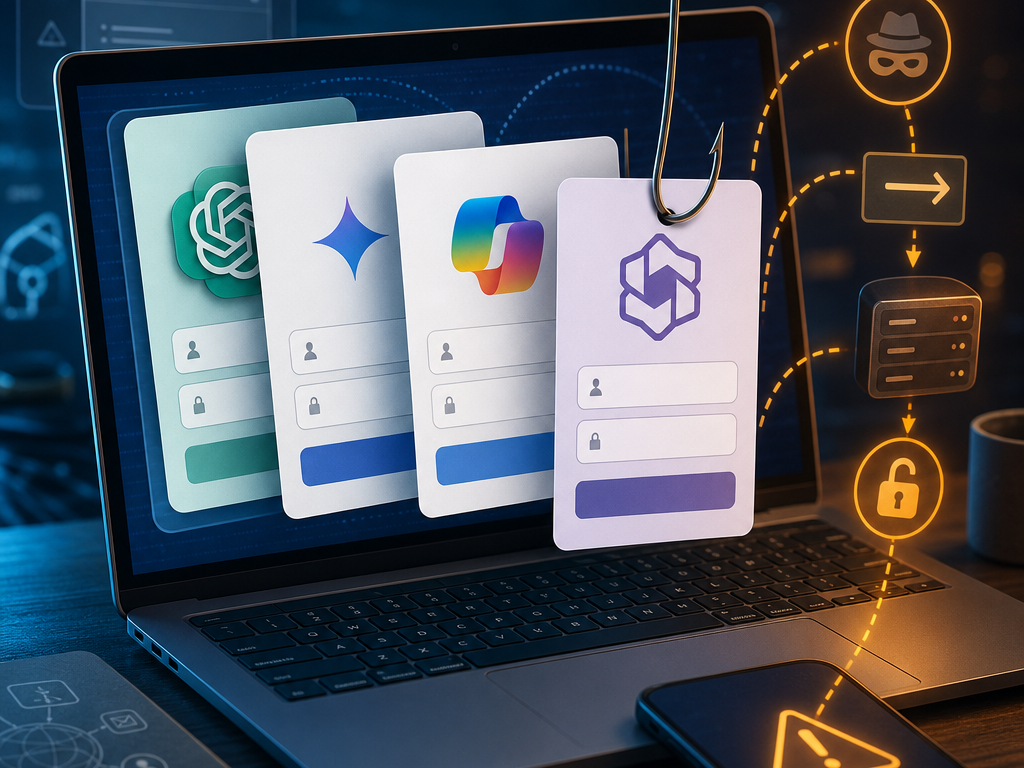
AI phishing lures just got a sharper public warning. On June 8, 2026, Microsoft Threat Intelligence published new reporting showing that attackers are increasingly abusing the branding of ChatGPT, Claude, DeepSeek, and Microsoft Copilot to push victims into phishing flows, malware delivery, and financial fraud. That matters now because this is not another abstract claim that AI helps bad actors write better emails. It is a fresh operational picture of attackers using trusted AI brands as the entry point.
If your team thinks of AI risk mostly in terms of prompt injection, model misuse, or data leakage inside chat tools, this story widens the lens. The threat is also showing up one step earlier, at the moment a user decides whether the email, ad, search result, or download page in front of them looks legitimate enough to trust.
Key Takeaway: The important shift is not that phishing exists. It is that AI brands now provide attackers with a high-conversion wrapper for old tradecraft, especially in workplaces where employees already expect to see ChatGPT, Claude, Copilot, and DeepSeek in daily workflows.
Why AI phishing lures matter right now
Microsoft's June 8, 2026 post is the freshness hook here, not the older broader discussion about AI as tradecraft. The company described multiple recent campaigns where threat actors impersonated well-known AI services and routed victims through phishing pages, malvertising chains, or SEO-poisoned downloads to steal credentials, payment data, access tokens, or deliver malware.
That framing is useful because it corrects a common misunderstanding. These incidents do not require a compromise of OpenAI, Anthropic, DeepSeek, or Microsoft. Attackers are succeeding by borrowing brand trust, user curiosity, and workplace familiarity.
Security teams should pay attention for another reason: AI tools have become normal enough that fake upgrade notices, billing prompts, account warnings, and "download the latest model" pages no longer look unusual. In many organizations, those prompts fit naturally into what employees already do every day.
Recent Hexon coverage has focused on AI controls inside the product boundary, from ChatGPT Lockdown Mode to password manager and MFA rollout discipline. This story sits one layer earlier in the kill chain. It is about how attackers win before a user ever reaches the real product.
What Microsoft actually found
Microsoft's reporting is stronger than a generic "AI scams are rising" headline because it lays out concrete campaign patterns.
ChatGPT-themed payment phishing
One campaign detected on May 5, 2026 used the display name ChatGPT and urgent language telling users to update their payment method or lose ChatGPT Plus access. Victims were bounced through several redirect layers, including legitimate services, before landing on phishing pages that collected personal and payment-card data.
That is a practical reminder that the lure is no longer just the final fake page. The entire redirect chain is part of the attack design, helping the campaign borrow reputation from trusted platforms and making simplistic detection harder.
Claude-themed policy enforcement emails
Microsoft also described a Claude-branded phishing campaign that told recipients their account had violated acceptable-use policies and required immediate action. The urgency was familiar, but the wrapper was timely: an account-enforcement message from a tool many workers now use for coding, writing, research, or internal knowledge work.
This matters because it turns routine trust into attack surface. A message that would once have looked like generic SaaS phishing can now feel contextually plausible to engineering, product, and operations teams already living inside AI tools.
DeepSeek download traps and SEO poisoning
The DeepSeek examples may be the most useful warning for defenders because they extend beyond email. Microsoft described fake repositories and staged assets that used SEO-heavy tactics, copied branding, and fake release packaging to push users toward malicious downloads.
That makes the threat broader than inbox security. Users can encounter the lure through search, ads, forums, social posts, or "helpful" installation guides that appear to be part of the AI ecosystem.
Key Stat: Microsoft said one ChatGPT-themed campaign delivered as many as 100,000 emails in a single day, while the Claude-themed activity targeted users across more than 2,000 organizations.
%22%2F%3E%0A%20%20%3Ccircle%20cx%3D%221270%22%20cy%3D%22180%22%20r%3D%22210%22%20fill%3D%22rgba(123%2C%20215%2C%20255%2C%200.18)%22%2F%3E%0A%20%20%3Ccircle%20cx%3D%22310%22%20cy%3D%22710%22%20r%3D%22250%22%20fill%3D%22rgba(52%2C%20211%2C%20153%2C%200.10)%22%2F%3E%0A%20%20%3Cpath%20d%3D%22M160%20708C340%20574%20498%20531%20653%20566C828%20605%20941%20504%201086%20418C1191%20355%201308%20317%201440%20332%22%20stroke%3D%22%237bd7ff%22%20stroke-width%3D%2210%22%20stroke-linecap%3D%22round%22%20opacity%3D%220.85%22%2F%3E%0A%20%20%3Cpath%20d%3D%22M160%20640H1440%22%20stroke%3D%22rgba(255%2C255%2C255%2C0.08)%22%20stroke-width%3D%222%22%2F%3E%0A%20%20%3Cpath%20d%3D%22M160%20298H1440%22%20stroke%3D%22rgba(255%2C255%2C255%2C0.08)%22%20stroke-width%3D%222%22%2F%3E%0A%20%20%3Crect%20x%3D%22160%22%20y%3D%22142%22%20width%3D%22174%22%20height%3D%2236%22%20rx%3D%2218%22%20fill%3D%22rgba(123%2C%20215%2C%20255%2C%200.18)%22%20stroke%3D%22%237bd7ff%22%2F%3E%0A%20%20%3Ctext%20x%3D%22247%22%20y%3D%22166%22%20text-anchor%3D%22middle%22%20fill%3D%22%23D9F4FF%22%20font-size%3D%2218%22%20font-family%3D%22Arial%2C%20Helvetica%2C%20sans-serif%22%20letter-spacing%3D%222%22%3EAI%20SECURITY%3C%2Ftext%3E%0A%20%20%3Ctext%20x%3D%22160%22%20y%3D%22392%22%20fill%3D%22%23F7FBFF%22%20font-size%3D%2266%22%20font-weight%3D%22700%22%20font-family%3D%22Arial%2C%20Helvetica%2C%20sans-serif%22%3EWhy%20these%20lures%20work%20better%3C%2Ftext%3E%0A%20%20%3Ctext%20x%3D%22160%22%20y%3D%22470%22%20fill%3D%22%23F7FBFF%22%20font-size%3D%2266%22%20font-weight%3D%22700%22%20font-family%3D%22Arial%2C%20Helvetica%2C%20sans-serif%22%3Ethan%20generic%20phishing%3C%2Ftext%3E%0A%20%20%3Ctext%20x%3D%22160%22%20y%3D%22554%22%20fill%3D%22%23A8B8C8%22%20font-size%3D%2228%22%20font-family%3D%22Arial%2C%20Helvetica%2C%20sans-serif%22%3EAI%20Phishing%20Lures%3A%20Why%20ChatGPT%2C%20Claude%2C%3C%2Ftext%3E%0A%20%20%3Crect%20x%3D%221080%22%20y%3D%22420%22%20width%3D%22274%22%20height%3D%22182%22%20rx%3D%2222%22%20fill%3D%22%230E2231%22%20stroke%3D%22rgba(255%2C255%2C255%2C0.10)%22%2F%3E%0A%20%20%3Crect%20x%3D%221120%22%20y%3D%22458%22%20width%3D%22112%22%20height%3D%2218%22%20rx%3D%229%22%20fill%3D%22%237bd7ff%22%20opacity%3D%220.9%22%2F%3E%0A%20%20%3Crect%20x%3D%221120%22%20y%3D%22498%22%20width%3D%22180%22%20height%3D%2212%22%20rx%3D%226%22%20fill%3D%22rgba(255%2C255%2C255%2C0.2)%22%2F%3E%0A%20%20%3Crect%20x%3D%221120%22%20y%3D%22526%22%20width%3D%22146%22%20height%3D%2212%22%20rx%3D%226%22%20fill%3D%22rgba(255%2C255%2C255%2C0.14)%22%2F%3E%0A%20%20%3Crect%20x%3D%221120%22%20y%3D%22554%22%20width%3D%2288%22%20height%3D%2212%22%20rx%3D%226%22%20fill%3D%22rgba(255%2C255%2C255%2C0.12)%22%2F%3E%0A%20%20%3Ccircle%20cx%3D%221340%22%20cy%3D%22522%22%20r%3D%2244%22%20fill%3D%22rgba(123%2C%20215%2C%20255%2C%200.18)%22%20stroke%3D%22%237bd7ff%22%2F%3E%0A%20%20%3Cpath%20d%3D%22M1322%20522L1336%20536L1360%20506%22%20stroke%3D%22%237bd7ff%22%20stroke-width%3D%228%22%20stroke-linecap%3D%22round%22%20stroke-linejoin%3D%22round%22%2F%3E%0A%20%20%3Ctext%20x%3D%22160%22%20y%3D%22748%22%20fill%3D%22%237BD7FF%22%20font-size%3D%2222%22%20font-family%3D%22Arial%2C%20Helvetica%2C%20sans-serif%22%20letter-spacing%3D%223%22%3EHEXON%20%2F%2F%20SUPPORTING%20VISUAL%3C%2Ftext%3E%0A%3C%2Fsvg%3E)
Why these lures work better than generic phishing
Attackers are not just slapping AI logos onto the same old messages for fun. They are choosing brands that map cleanly to real user behavior.
First, AI services create a believable reason for users to expect unusual prompts. Subscription updates, policy notices, workspace invites, model downloads, browser extensions, API tokens, and plugin installs are all normal enough to reduce skepticism.
Second, AI products attract users who move quickly. Developers, analysts, marketers, and operators often click through new tools because speed is part of the value proposition. That makes frictionless experimentation a security weakness.
Third, AI branding collapses several social-engineering goals into one wrapper:
- it signals novelty
- it implies productivity upside
- it borrows trust from a known vendor
- it gives attackers a reason to ask for credentials, payment info, or downloads
This is why the attack path can outperform generic credential phishing. The user is not only reacting to fear or urgency. They may also be reacting to curiosity, fear of missing out, or the assumption that the request fits a current workflow.
The real lesson: the attack surface has shifted toward trust
CSO Online's June 9 follow-up put the issue plainly: security pressure is shifting toward the human layer as AI scams surge. That is the right framing.
For years, defenders treated phishing primarily as an email problem. Then it became an identity problem. Now it is also a workflow-trust problem. Users increasingly rely on AI tools for drafting, coding, analysis, support, and automation, so anything that looks like a normal AI interaction has a better chance of slipping past instinctive caution.
That trust shift shows up in several places:
- fake billing or renewal prompts for AI subscriptions
- fake policy or compliance notices tied to AI accounts
- fake repositories and installers for trending AI tools
- fake "assistant" workflows that request access tokens or credentials
- ads and search results designed to look like the fastest path to a wanted tool
None of this requires frontier-model magic. It just requires adversaries to understand how people now discover and use AI services.
Common Mistake: Treating AI phishing as a content problem only. The bigger issue is distribution and trust choreography: redirect chains, search manipulation, abused legitimate services, fake repos, and realistic account narratives.
This is also why older awareness advice is not enough. "Be suspicious of strange emails" is too weak when the message references a real tool the employee already uses, with branding they recognize, in a workflow they expect.
%22%2F%3E%0A%20%20%3Ccircle%20cx%3D%221270%22%20cy%3D%22180%22%20r%3D%22210%22%20fill%3D%22rgba(167%2C%20139%2C%20250%2C%200.18)%22%2F%3E%0A%20%20%3Ccircle%20cx%3D%22310%22%20cy%3D%22710%22%20r%3D%22250%22%20fill%3D%22rgba(52%2C%20211%2C%20153%2C%200.10)%22%2F%3E%0A%20%20%3Cpath%20d%3D%22M160%20708C340%20574%20498%20531%20653%20566C828%20605%20941%20504%201086%20418C1191%20355%201308%20317%201440%20332%22%20stroke%3D%22%23a78bfa%22%20stroke-width%3D%2210%22%20stroke-linecap%3D%22round%22%20opacity%3D%220.85%22%2F%3E%0A%20%20%3Cpath%20d%3D%22M160%20640H1440%22%20stroke%3D%22rgba(255%2C255%2C255%2C0.08)%22%20stroke-width%3D%222%22%2F%3E%0A%20%20%3Cpath%20d%3D%22M160%20298H1440%22%20stroke%3D%22rgba(255%2C255%2C255%2C0.08)%22%20stroke-width%3D%222%22%2F%3E%0A%20%20%3Crect%20x%3D%22160%22%20y%3D%22142%22%20width%3D%22174%22%20height%3D%2236%22%20rx%3D%2218%22%20fill%3D%22rgba(167%2C%20139%2C%20250%2C%200.18)%22%20stroke%3D%22%23a78bfa%22%2F%3E%0A%20%20%3Ctext%20x%3D%22247%22%20y%3D%22166%22%20text-anchor%3D%22middle%22%20fill%3D%22%23D9F4FF%22%20font-size%3D%2218%22%20font-family%3D%22Arial%2C%20Helvetica%2C%20sans-serif%22%20letter-spacing%3D%222%22%3EAI%20SECURITY%3C%2Ftext%3E%0A%20%20%3Ctext%20x%3D%22160%22%20y%3D%22392%22%20fill%3D%22%23F7FBFF%22%20font-size%3D%2266%22%20font-weight%3D%22700%22%20font-family%3D%22Arial%2C%20Helvetica%2C%20sans-serif%22%3EWhat%20defenders%20should%20change%3C%2Ftext%3E%0A%20%20%3Ctext%20x%3D%22160%22%20y%3D%22470%22%20fill%3D%22%23F7FBFF%22%20font-size%3D%2266%22%20font-weight%3D%22700%22%20font-family%3D%22Arial%2C%20Helvetica%2C%20sans-serif%22%3Enow%3C%2Ftext%3E%0A%20%20%3Ctext%20x%3D%22160%22%20y%3D%22554%22%20fill%3D%22%23A8B8C8%22%20font-size%3D%2228%22%20font-family%3D%22Arial%2C%20Helvetica%2C%20sans-serif%22%3EAI%20Phishing%20Lures%3A%20Why%20ChatGPT%2C%20Claude%2C%3C%2Ftext%3E%0A%20%20%3Crect%20x%3D%221080%22%20y%3D%22420%22%20width%3D%22274%22%20height%3D%22182%22%20rx%3D%2222%22%20fill%3D%22%230E2231%22%20stroke%3D%22rgba(255%2C255%2C255%2C0.10)%22%2F%3E%0A%20%20%3Crect%20x%3D%221120%22%20y%3D%22458%22%20width%3D%22112%22%20height%3D%2218%22%20rx%3D%229%22%20fill%3D%22%23a78bfa%22%20opacity%3D%220.9%22%2F%3E%0A%20%20%3Crect%20x%3D%221120%22%20y%3D%22498%22%20width%3D%22180%22%20height%3D%2212%22%20rx%3D%226%22%20fill%3D%22rgba(255%2C255%2C255%2C0.2)%22%2F%3E%0A%20%20%3Crect%20x%3D%221120%22%20y%3D%22526%22%20width%3D%22146%22%20height%3D%2212%22%20rx%3D%226%22%20fill%3D%22rgba(255%2C255%2C255%2C0.14)%22%2F%3E%0A%20%20%3Crect%20x%3D%221120%22%20y%3D%22554%22%20width%3D%2288%22%20height%3D%2212%22%20rx%3D%226%22%20fill%3D%22rgba(255%2C255%2C255%2C0.12)%22%2F%3E%0A%20%20%3Ccircle%20cx%3D%221340%22%20cy%3D%22522%22%20r%3D%2244%22%20fill%3D%22rgba(167%2C%20139%2C%20250%2C%200.18)%22%20stroke%3D%22%23a78bfa%22%2F%3E%0A%20%20%3Cpath%20d%3D%22M1322%20522L1336%20536L1360%20506%22%20stroke%3D%22%23a78bfa%22%20stroke-width%3D%228%22%20stroke-linecap%3D%22round%22%20stroke-linejoin%3D%22round%22%2F%3E%0A%20%20%3Ctext%20x%3D%22160%22%20y%3D%22748%22%20fill%3D%22%237BD7FF%22%20font-size%3D%2222%22%20font-family%3D%22Arial%2C%20Helvetica%2C%20sans-serif%22%20letter-spacing%3D%223%22%3EHEXON%20%2F%2F%20SUPPORTING%20VISUAL%3C%2Ftext%3E%0A%3C%2Fsvg%3E)
What defenders should change now
The good news is that this is still a solvable problem if teams respond at the right layer.
1. Update phishing training to match AI workflows
Most security awareness programs still train users on payroll notices, shared-doc links, and invoice scams. That baseline still matters, but it misses the new routine.
Training now needs to include examples such as:
- fake ChatGPT or Claude billing notices
- AI account "policy violation" alerts
- search results for popular AI tools leading to fake installers
- prompts asking users to paste tokens, payment data, or workspace credentials
If users are already using AI tools at work, awareness content should look like the tools they actually see.
2. Put AI tool access behind stronger sign-in hygiene
The Meta support-bot incident from earlier this cycle showed what happens when account recovery and authentication controls are weak. The same principle applies here.
High-value AI accounts should get the same identity treatment as email or cloud consoles:
- enforce MFA or passkeys where available
- monitor new device and new session patterns
- review password-reset and payment-update flows
- reduce shared account use
This is one reason vendor access risk and identity hygiene are now inseparable from AI security. If the account is valuable to the business, the attack surface includes the fake page trying to impersonate it.
3. Treat search and browser behavior as part of the control plane
Defenders often know how to monitor email better than they monitor search or browser-driven discovery. That gap matters here.
Security teams should:
- block known-malicious or newly seen lookalike domains quickly
- review ad-click and search-result driven traffic for high-risk categories
- restrict unapproved browser extensions
- standardize the approved route to major AI tools through bookmarks, portals, or managed launchers
That last point is underrated. The more users discover AI tools by searching the open web, the easier it is for attackers to intercept attention.
4. Watch for SEO poisoning and fake repositories
The DeepSeek-style examples underline a pattern Hexon has seen before in malicious AI browser extensions and AI supply chain attacks on developer platforms. The lure may be different, but the lesson is familiar: popularity signals are not trust signals.
For developer-heavy environments, that means validating:
- the real vendor domain
- the canonical repository owner
- release integrity and hashes where available
- whether the "tool" is being recommended through official channels or random SEO pages
5. Harden response around identity, not only malware
Some of these campaigns aim to drop malware. Others just want access.
So the incident plan should not start and end with endpoint isolation. It should also include:
- token revocation
- forced password resets
- session review
- payment-card exposure review when billing pages were involved
- communication to employees about the exact lure they may have seen
Pro Tip: Publish an internal "official AI tools" page with direct links to approved vendors, supported login paths, and payment guidance. Reducing discovery chaos is one of the simplest ways to lower click risk.
What this means for Hexon readers
The bigger strategic point is that AI security stories are starting to split into two categories.
One category is about what happens inside the system: prompt injection, data exfiltration, unsafe agents, or over-permissioned connectors. The other is about what happens around the system: fake brands, fake repos, fake billing prompts, and attackers piggybacking on the AI adoption curve itself.
Security leaders need both views at once. You can ship better model guardrails and still lose users to a fake Claude notice or a poisoned DeepSeek download page. You can harden the assistant and still get compromised through the support, billing, or discovery path wrapped around it.
That is why this June 8 Microsoft report matters beyond the individual campaigns it documented. It shows that the AI boom is not just creating new model-layer risk. It is also refreshing one of the oldest attack categories in the book with better bait, broader reach, and more believable timing.
Final takeaway
The freshest defensible hook here is Microsoft's June 8, 2026 threat-intelligence report on AI phishing lures using the branding of ChatGPT, Claude, DeepSeek, and Copilot. June 9 follow-up coverage helped broaden the conversation, but the main public report date is still June 8.
If you run security for a growing team, the immediate lesson is simple: stop treating AI risk as only a model problem. It is also a trust-distribution problem. The same brands your employees reach for to move faster are now being used to pull them into phishing pages, malicious redirects, fake repositories, and credential theft flows.
The teams that handle this best will not just warn users to be careful. They will tighten identity, reduce open-web discovery risk, standardize approved AI access paths, and teach employees what an AI phishing lure actually looks like in a workday that already revolves around AI tools.