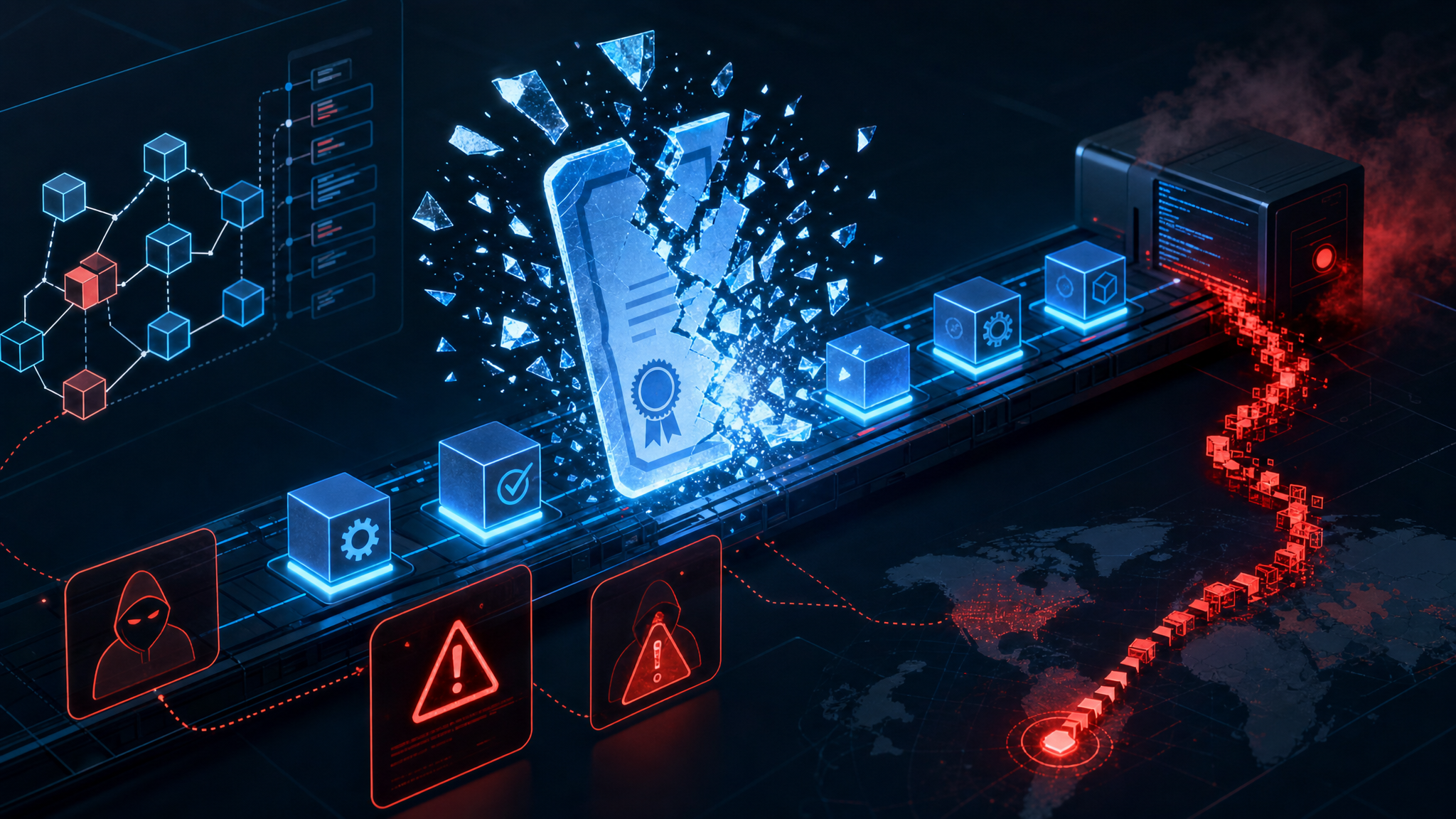
OpenAI has confirmed that attackers stole limited credential material from a subset of internal source code repositories after two employee devices were compromised in the latest TanStack npm supply chain attack. The company says it found no evidence that user data was accessed, no evidence its production systems or intellectual property were compromised, and no evidence its software was altered. That is the good news.
The more important news is what this incident reveals about the next phase of software supply chain risk. OpenAI says the affected repositories included code-signing certificates for products including macOS, iOS, and Windows. The company is now rotating those certificates as a precaution, coordinating with platform providers to block new notarizations under the old material, and requiring macOS users to update before June 12, 2026.
This was not a breach driven by a missing patch or a weak password sprayed at a public login page. It started upstream, inside a trusted open-source dependency chain, then moved through developer tooling and internal access paths. That makes it a much more important story than a narrow headline about "some data" being stolen.
What OpenAI Actually Said
OpenAI's official response is fairly precise, and that precision matters.
According to the company:
- Two employee devices in its corporate environment were impacted
- It observed credential-focused exfiltration activity consistent with the publicly documented malware behavior
- The activity reached a limited subset of internal source code repositories those employees could access
- Only limited credential material was confirmed stolen from those repositories
- OpenAI found no evidence that customer data, production systems, intellectual property, or published software were compromised
Key Stat: The most consequential detail is that the impacted repositories contained signing certificates for OpenAI products, which is why the company is rotating them even though it says it found no evidence of malicious software signed with those certificates.
That is a prudent move. Code-signing material is high-consequence infrastructure. Once attackers gain even partial access to that trust layer, the risk is no longer just about what was stolen. It is about what could be trusted later if defenders do nothing.
Why the Certificate Rotation Matters
Many organizations treat code-signing certificates like a compliance checkbox. They are not. They are trust anchors.
When a vendor signs software, operating systems and users infer that the binary came from the legitimate publisher and has not been altered since signing. If the signing process or signing material is ever in doubt, the blast radius goes beyond one repository or one developer laptop. It touches the integrity model users rely on every time they click install.
OpenAI says it found no evidence of malicious software being signed, and it says its published software was validated as unmodified. But it is still rotating certificates and working with platform providers to prevent unauthorized use. That tells you how seriously sophisticated vendors now treat even potential erosion of signing trust.
For macOS users, the practical effect is straightforward: OpenAI says older app versions signed with the previous certificate will stop being supported and may stop functioning after June 12, 2026. In other words, the security remediation is not abstract. It changes product operations.
Key Takeaway: In 2026, supply chain incidents are increasingly about trust infrastructure - signing keys, provenance attestations, CI/CD identity, and package integrity - not just source code theft.
The Attack Path: Why TanStack Matters
The OpenAI incident was not isolated. It was part of the broader TanStack npm compromise that quickly became one of the clearest examples of modern supply chain tradecraft.
TanStack's postmortem says attackers published 84 malicious versions across 42 packages in a six-minute window on May 11. The compromise chained together three separate weaknesses:
- A risky
pull_request_targetworkflow pattern - GitHub Actions cache poisoning across trust boundaries
- Theft of an OIDC token from runner memory
That combination let the attacker publish packages through the legitimate release path with valid provenance signals. From the outside, the packages looked cryptographically authentic.
This is the key strategic lesson. Defenders have spent years telling developers to verify package signatures, trust provenance, and prefer attested builds. Those are still good controls. But the TanStack incident shows that if the legitimate pipeline itself is subverted, those signals can validate malware instead of preventing it.
BleepingComputer, citing StepSecurity and other researchers, reported that the broader Shai-Hulud campaign spread beyond TanStack into other ecosystems and targeted developer secrets across cloud credentials, GitHub tokens, SSH keys, Vault tokens, Kubernetes service accounts, and local environment files. This is exactly why OpenAI's statement about limited credential theft deserves attention even if the company avoided the worst-case outcome.
%22%2F%3E%0A%20%20%3Ccircle%20cx%3D%221270%22%20cy%3D%22180%22%20r%3D%22210%22%20fill%3D%22rgba(123%2C%20215%2C%20255%2C%200.18)%22%2F%3E%0A%20%20%3Ccircle%20cx%3D%22310%22%20cy%3D%22710%22%20r%3D%22250%22%20fill%3D%22rgba(52%2C%20211%2C%20153%2C%200.10)%22%2F%3E%0A%20%20%3Cpath%20d%3D%22M160%20708C340%20574%20498%20531%20653%20566C828%20605%20941%20504%201086%20418C1191%20355%201308%20317%201440%20332%22%20stroke%3D%22%237bd7ff%22%20stroke-width%3D%2210%22%20stroke-linecap%3D%22round%22%20opacity%3D%220.85%22%2F%3E%0A%20%20%3Cpath%20d%3D%22M160%20640H1440%22%20stroke%3D%22rgba(255%2C255%2C255%2C0.08)%22%20stroke-width%3D%222%22%2F%3E%0A%20%20%3Cpath%20d%3D%22M160%20298H1440%22%20stroke%3D%22rgba(255%2C255%2C255%2C0.08)%22%20stroke-width%3D%222%22%2F%3E%0A%20%20%3Crect%20x%3D%22160%22%20y%3D%22142%22%20width%3D%22174%22%20height%3D%2236%22%20rx%3D%2218%22%20fill%3D%22rgba(123%2C%20215%2C%20255%2C%200.18)%22%20stroke%3D%22%237bd7ff%22%2F%3E%0A%20%20%3Ctext%20x%3D%22247%22%20y%3D%22166%22%20text-anchor%3D%22middle%22%20fill%3D%22%23D9F4FF%22%20font-size%3D%2218%22%20font-family%3D%22Arial%2C%20Helvetica%2C%20sans-serif%22%20letter-spacing%3D%222%22%3EAI%20SECURITY%3C%2Ftext%3E%0A%20%20%3Ctext%20x%3D%22160%22%20y%3D%22392%22%20fill%3D%22%23F7FBFF%22%20font-size%3D%2266%22%20font-weight%3D%22700%22%20font-family%3D%22Arial%2C%20Helvetica%2C%20sans-serif%22%3EProvenance%20Is%20Necessary%2C%20Not%3C%2Ftext%3E%0A%20%20%3Ctext%20x%3D%22160%22%20y%3D%22470%22%20fill%3D%22%23F7FBFF%22%20font-size%3D%2266%22%20font-weight%3D%22700%22%20font-family%3D%22Arial%2C%20Helvetica%2C%20sans-serif%22%3ESufficient%3C%2Ftext%3E%0A%20%20%3Ctext%20x%3D%22160%22%20y%3D%22554%22%20fill%3D%22%23A8B8C8%22%20font-size%3D%2228%22%20font-family%3D%22Arial%2C%20Helvetica%2C%20sans-serif%22%3EOpenAI%20Says%20Hackers%20Stole%20Signing%3C%2Ftext%3E%0A%20%20%3Crect%20x%3D%221080%22%20y%3D%22420%22%20width%3D%22274%22%20height%3D%22182%22%20rx%3D%2222%22%20fill%3D%22%230E2231%22%20stroke%3D%22rgba(255%2C255%2C255%2C0.10)%22%2F%3E%0A%20%20%3Crect%20x%3D%221120%22%20y%3D%22458%22%20width%3D%22112%22%20height%3D%2218%22%20rx%3D%229%22%20fill%3D%22%237bd7ff%22%20opacity%3D%220.9%22%2F%3E%0A%20%20%3Crect%20x%3D%221120%22%20y%3D%22498%22%20width%3D%22180%22%20height%3D%2212%22%20rx%3D%226%22%20fill%3D%22rgba(255%2C255%2C255%2C0.2)%22%2F%3E%0A%20%20%3Crect%20x%3D%221120%22%20y%3D%22526%22%20width%3D%22146%22%20height%3D%2212%22%20rx%3D%226%22%20fill%3D%22rgba(255%2C255%2C255%2C0.14)%22%2F%3E%0A%20%20%3Crect%20x%3D%221120%22%20y%3D%22554%22%20width%3D%2288%22%20height%3D%2212%22%20rx%3D%226%22%20fill%3D%22rgba(255%2C255%2C255%2C0.12)%22%2F%3E%0A%20%20%3Ccircle%20cx%3D%221340%22%20cy%3D%22522%22%20r%3D%2244%22%20fill%3D%22rgba(123%2C%20215%2C%20255%2C%200.18)%22%20stroke%3D%22%237bd7ff%22%2F%3E%0A%20%20%3Cpath%20d%3D%22M1322%20522L1336%20536L1360%20506%22%20stroke%3D%22%237bd7ff%22%20stroke-width%3D%228%22%20stroke-linecap%3D%22round%22%20stroke-linejoin%3D%22round%22%2F%3E%0A%20%20%3Ctext%20x%3D%22160%22%20y%3D%22748%22%20fill%3D%22%237BD7FF%22%20font-size%3D%2222%22%20font-family%3D%22Arial%2C%20Helvetica%2C%20sans-serif%22%20letter-spacing%3D%223%22%3EHEXON%20%2F%2F%20SUPPORTING%20VISUAL%3C%2Ftext%3E%0A%3C%2Fsvg%3E)
Provenance Is Necessary, Not Sufficient
One of the most dangerous security myths in software today is that provenance alone solves supply chain risk.
It does not.
Provenance tells you which pipeline produced an artifact. It does not tell you whether the pipeline was already compromised, whether the build context was poisoned, whether a trusted workflow executed attacker-controlled code, or whether a runner leaked an identity token during execution.
That distinction matters enormously for AI companies and fast-moving software organizations because they rely heavily on:
- Open-source dependencies
- Automated CI/CD workflows
- Internal package mirrors and registries
- Code-signing and notarization
- Developer laptops with privileged cloud and repo access
All of those are trust surfaces. And all of them are now active targets.
Common Mistake: Treating signed packages and valid attestations as a final answer. They are evidence of process continuity, not proof that the process was uncompromised.
Why This Hits AI Companies Especially Hard
AI vendors have a particularly ugly risk profile in supply chain incidents.
First, their developer environments often sit close to high-value assets such as model-serving infrastructure, internal evaluation tools, signing workflows, deployment controls, and sensitive customer-facing applications. Second, these companies move fast. That means broad dependency graphs, aggressive automation, and large numbers of privileged engineering workflows. Third, many AI products are now desktop applications, browser extensions, CLIs, and agentic tools that rely on user trust at installation time.
OpenAI's own response hints at this reality. The company said it had already accelerated deployment of stronger controls after the earlier Axios incident, including hardening sensitive CI/CD credential material, using package-manager settings like minimumReleaseAge, and adding software to validate provenance of new packages. The problem is that the two impacted devices had not yet received the updated configurations that would have blocked the malicious package download.
That is an uncomfortably common enterprise story. Security teams often know what the right control is, but phased rollout leaves a dangerous gap between policy and universal enforcement.
The Real Enterprise Lesson: Partial Deployment Is a Risk State
Security leaders love pilot programs. Attackers love partial rollouts.
OpenAI's statement implies the company was already moving in the right direction technically. But the incident still happened during rollout. That makes this a strong case study in a broader problem: security controls do not protect you when they exist only on the roadmap or only on part of the fleet.
This matters well beyond AI labs. Every enterprise is currently somewhere in the middle of adopting:
- hardened package-manager policies
- least-privilege repo access
- ephemeral CI/CD credentials
- stronger notarization controls
- device posture enforcement
- software provenance validation
During that transition period, mixed states become exploitable states. An attacker only needs the right dependency, the right workflow, and the right laptop that missed the new baseline.
%22%2F%3E%0A%20%20%3Ccircle%20cx%3D%221270%22%20cy%3D%22180%22%20r%3D%22210%22%20fill%3D%22rgba(167%2C%20139%2C%20250%2C%200.18)%22%2F%3E%0A%20%20%3Ccircle%20cx%3D%22310%22%20cy%3D%22710%22%20r%3D%22250%22%20fill%3D%22rgba(52%2C%20211%2C%20153%2C%200.10)%22%2F%3E%0A%20%20%3Cpath%20d%3D%22M160%20708C340%20574%20498%20531%20653%20566C828%20605%20941%20504%201086%20418C1191%20355%201308%20317%201440%20332%22%20stroke%3D%22%23a78bfa%22%20stroke-width%3D%2210%22%20stroke-linecap%3D%22round%22%20opacity%3D%220.85%22%2F%3E%0A%20%20%3Cpath%20d%3D%22M160%20640H1440%22%20stroke%3D%22rgba(255%2C255%2C255%2C0.08)%22%20stroke-width%3D%222%22%2F%3E%0A%20%20%3Cpath%20d%3D%22M160%20298H1440%22%20stroke%3D%22rgba(255%2C255%2C255%2C0.08)%22%20stroke-width%3D%222%22%2F%3E%0A%20%20%3Crect%20x%3D%22160%22%20y%3D%22142%22%20width%3D%22174%22%20height%3D%2236%22%20rx%3D%2218%22%20fill%3D%22rgba(167%2C%20139%2C%20250%2C%200.18)%22%20stroke%3D%22%23a78bfa%22%2F%3E%0A%20%20%3Ctext%20x%3D%22247%22%20y%3D%22166%22%20text-anchor%3D%22middle%22%20fill%3D%22%23D9F4FF%22%20font-size%3D%2218%22%20font-family%3D%22Arial%2C%20Helvetica%2C%20sans-serif%22%20letter-spacing%3D%222%22%3EAI%20SECURITY%3C%2Ftext%3E%0A%20%20%3Ctext%20x%3D%22160%22%20y%3D%22392%22%20fill%3D%22%23F7FBFF%22%20font-size%3D%2266%22%20font-weight%3D%22700%22%20font-family%3D%22Arial%2C%20Helvetica%2C%20sans-serif%22%3EWhat%20Security%20Teams%20Should%3C%2Ftext%3E%0A%20%20%3Ctext%20x%3D%22160%22%20y%3D%22470%22%20fill%3D%22%23F7FBFF%22%20font-size%3D%2266%22%20font-weight%3D%22700%22%20font-family%3D%22Arial%2C%20Helvetica%2C%20sans-serif%22%3EChange%20Right%20Now%3C%2Ftext%3E%0A%20%20%3Ctext%20x%3D%22160%22%20y%3D%22554%22%20fill%3D%22%23A8B8C8%22%20font-size%3D%2228%22%20font-family%3D%22Arial%2C%20Helvetica%2C%20sans-serif%22%3EOpenAI%20Says%20Hackers%20Stole%20Signing%3C%2Ftext%3E%0A%20%20%3Crect%20x%3D%221080%22%20y%3D%22420%22%20width%3D%22274%22%20height%3D%22182%22%20rx%3D%2222%22%20fill%3D%22%230E2231%22%20stroke%3D%22rgba(255%2C255%2C255%2C0.10)%22%2F%3E%0A%20%20%3Crect%20x%3D%221120%22%20y%3D%22458%22%20width%3D%22112%22%20height%3D%2218%22%20rx%3D%229%22%20fill%3D%22%23a78bfa%22%20opacity%3D%220.9%22%2F%3E%0A%20%20%3Crect%20x%3D%221120%22%20y%3D%22498%22%20width%3D%22180%22%20height%3D%2212%22%20rx%3D%226%22%20fill%3D%22rgba(255%2C255%2C255%2C0.2)%22%2F%3E%0A%20%20%3Crect%20x%3D%221120%22%20y%3D%22526%22%20width%3D%22146%22%20height%3D%2212%22%20rx%3D%226%22%20fill%3D%22rgba(255%2C255%2C255%2C0.14)%22%2F%3E%0A%20%20%3Crect%20x%3D%221120%22%20y%3D%22554%22%20width%3D%2288%22%20height%3D%2212%22%20rx%3D%226%22%20fill%3D%22rgba(255%2C255%2C255%2C0.12)%22%2F%3E%0A%20%20%3Ccircle%20cx%3D%221340%22%20cy%3D%22522%22%20r%3D%2244%22%20fill%3D%22rgba(167%2C%20139%2C%20250%2C%200.18)%22%20stroke%3D%22%23a78bfa%22%2F%3E%0A%20%20%3Cpath%20d%3D%22M1322%20522L1336%20536L1360%20506%22%20stroke%3D%22%23a78bfa%22%20stroke-width%3D%228%22%20stroke-linecap%3D%22round%22%20stroke-linejoin%3D%22round%22%2F%3E%0A%20%20%3Ctext%20x%3D%22160%22%20y%3D%22748%22%20fill%3D%22%237BD7FF%22%20font-size%3D%2222%22%20font-family%3D%22Arial%2C%20Helvetica%2C%20sans-serif%22%20letter-spacing%3D%223%22%3EHEXON%20%2F%2F%20SUPPORTING%20VISUAL%3C%2Ftext%3E%0A%3C%2Fsvg%3E)
What Security Teams Should Change Right Now
This incident should push organizations to tighten four areas immediately.
1. Harden Package Installation Policies
Use controls that slow down or block newly published packages until they age out of the highest-risk window. OpenAI specifically referenced minimumReleaseAge, which is becoming one of the most practical defenses against rapid package hijacks.
Organizations should also:
- enforce lockfile-only installs where possible
- block direct installs from unreviewed package versions
- restrict lifecycle script execution in high-risk environments
- monitor for unexpected optional dependencies and post-install behavior
2. Treat Developer Endpoints as Tier-0 Security Assets
If a developer laptop can reach source repositories, cloud credentials, signing workflows, or deployment systems, it is not a normal workstation. It is privileged infrastructure.
That means:
- stricter application controls
- stronger EDR coverage
- hardware-backed credential protection where available
- isolation between daily productivity apps and engineering secrets
- rapid containment playbooks for suspicious package execution
3. Reduce the Blast Radius of Repo Access
OpenAI says the exfiltration reached only the subset of internal repositories accessible to the affected employees. That is better than broad compromise, but it also underscores the importance of narrow access design.
Security teams should review:
- who can access signing material and release repositories
- whether sensitive repositories are segmented from routine development work
- whether developer identities can mint or retrieve high-value credentials indirectly
- whether certificate material can be moved into stronger hardware-backed controls or more isolated signing services
4. Stop Treating Trust Signals as Binary
A build can be signed, attested, and still malicious if the pipeline producing it has already been compromised. Verification needs to include behavioral controls, release anomaly detection, pipeline policy, and post-build scrutiny.
In practical terms, that means:
- monitor for unusual publish paths inside trusted CI/CD workflows
- alert on new notarizations, signing events, or package publishes outside expected job stages
- validate that package contents match expected repository state and release logic
- maintain emergency certificate rotation and revocation playbooks before you need them
Why This Story Matters More Than the Headline Suggests
The TechCrunch headline focuses on stolen data. That is accurate, but incomplete.
The more important development is that a major AI vendor was forced to rotate code-signing certificates after a compromise that started in a trusted open-source package chain and moved through developer endpoints. That should get the attention of every security team that still thinks supply chain defense is mostly about SBOM inventories and signature verification.
We are now in a phase where attackers increasingly target the machinery of trust itself:
- CI/CD identity
- package registries
- runner memory
- signing certificates
- update channels
- developer machines that bridge all of the above
Once that machinery is in play, traditional perimeter thinking breaks down fast.
What Happens Next
OpenAI's immediate response appears disciplined: isolate impacted systems, revoke sessions, rotate credentials across impacted repositories, temporarily restrict code-deployment workflows, rotate signing certificates, and coordinate with platform providers to block unauthorized notarization.
That is the right shape of incident response.
But the broader issue is not whether OpenAI contained this event. It is whether the software industry can adapt fast enough to a world where upstream package compromise, trusted CI identity abuse, and certificate-related remediation are routine instead of exceptional.
TanStack's postmortem, OpenAI's disclosure, and the wider Shai-Hulud campaign all point in the same direction. The next generation of supply chain attacks will not always look obviously fake. In many cases they will look properly signed, properly published, and perfectly legitimate right up to the moment they empty your secrets vault.
Conclusion
OpenAI says the damage from this incident was limited. If its investigation holds, that is reassuring. But security teams should resist the temptation to file this away as a minor contained event.
This incident is a warning shot about where software compromise is heading. The lesson is not simply that developers should be careful with npm packages. The lesson is that valid provenance, legitimate workflows, and signed artifacts can all be abused when attackers compromise the trust chain upstream.
That changes the security model for everyone building or buying software in 2026.
The organizations that adapt fastest will be the ones that assume every trusted automation path can become an attack path, every developer endpoint can become a bridge, and every signing key can become a crisis if it is not isolated properly.
In the AI era, software trust is no longer just about whether code runs. It is about whether the systems that vouch for that code still deserve to be believed.