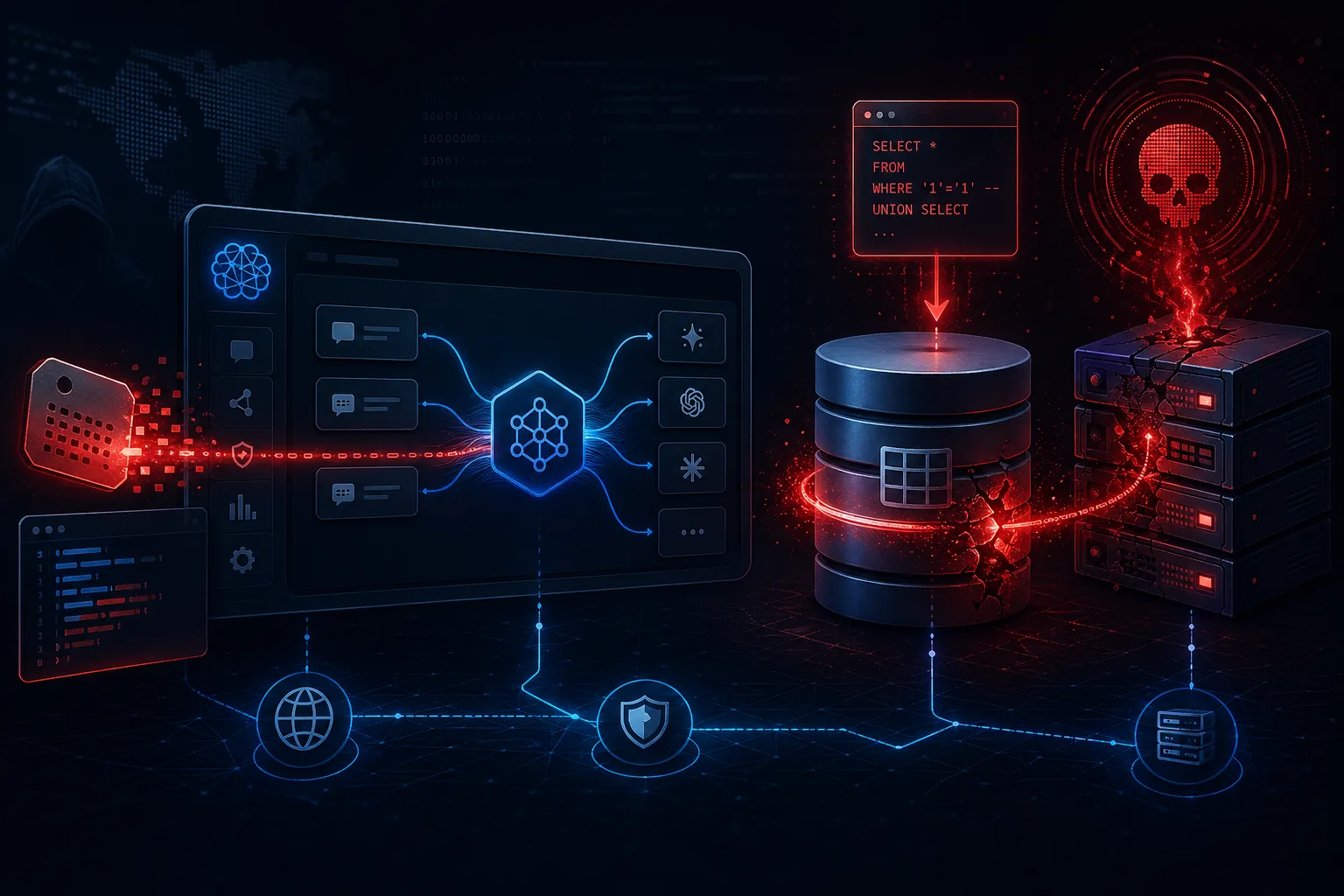
The database query looked completely normal. Just another authentication check against the LiteLLM proxy's PostgreSQL backend. But hidden in the Authorization header was something that would make any security engineer's blood run cold: a carefully crafted SQL injection payload that bypassed every authentication control and granted direct access to the crown jewels.
Within 36 hours of public disclosure, attackers were already exploiting it. Not just probing. Actively extracting API keys, cloud credentials, and authentication tokens from production databases.
Welcome to CVE-2026-42208 - a critical pre-authentication SQL injection vulnerability in LiteLLM that doesn't just expose your AI proxy. It hands attackers the keys to everything you've connected to it.
The Vulnerability: When Authentication Becomes the Attack Vector
What Is LiteLLM?
LiteLLM has become the Swiss Army knife of AI infrastructure. This open-source proxy gateway allows organizations to route requests to 100+ LLM providers through a unified interface. It handles API key management, rate limiting, load balancing, and spend tracking across OpenAI, Anthropic, Google, Azure, and dozens more.
With over 480 million downloads and adoption by enterprises ranging from startups to Fortune 500s, LiteLLM sits at a critical junction in modern AI architectures. It's the gatekeeper to your AI infrastructure - which makes it an extraordinarily valuable target.
The SQL Injection Flaw
CVE-2026-42208 (GHSA-r75f-5x8p-qvmc) represents a fundamental security failure in how LiteLLM handled authentication tokens. The vulnerability allowed pre-authentication SQL injection through the Authorization: Bearer header.
Here's what went wrong:
The application concatenated the Bearer token directly into a SQL query without parameterization. An attacker could inject arbitrary SQL commands by crafting a malicious token value. Because this occurred during the authentication phase, no valid credentials were required to exploit it.
💡 Pro Tip: SQL injection in 2026? Yes, it still happens. Even in modern AI infrastructure built by experienced developers. The lesson: never assume frameworks handle sanitization automatically. Always verify input validation, especially for authentication paths.
The Attack Surface
The vulnerable code path affected LiteLLM Proxy versions before 1.83.7. Any instance with:
- PostgreSQL backend database
- Authentication enabled (SSO, API key auth, or username/password)
- Exposed to network access
...was potentially vulnerable to complete database compromise.
📊 Key Stat: According to runZero's internet scanning, thousands of LiteLLM instances remain exposed to the public internet, many running versions vulnerable to CVE-2026-42208 and related flaws.
The Exploitation Timeline: From Disclosure to Active Attacks
April 24, 2026: Public Disclosure
LiteLLM maintainers disclosed CVE-2026-42208 along with several related vulnerabilities:
- GHSA-r75f-5x8p-qvmc - SQL Injection (CVE-2026-42208)
- GHSA-xxx - Server-Side Template Injection (SSTI)
- GHSA-xxx - Command Injection
When chained together, these vulnerabilities enabled full remote code execution (RCE) on affected systems.
36 Hours Later: Active Exploitation Begins
Sysdig's threat intelligence team detected the first exploitation attempts within 36 hours of disclosure. Unlike the earlier Marimo vulnerability - which saw generic smash-and-grab attacks - the LiteLLM exploitation was notably more sophisticated:
Targeted Data Extraction:
Attackers weren't just running whoami and moving on. They specifically targeted three high-value tables:
user_api_keys- Containing all stored API keys for LLM providerscredentials- Cloud provider credentials and authentication tokensconfig- System configuration including secrets and connection strings
This wasn't opportunistic. It was deliberate intelligence gathering.
⚠️ Common Mistake: Assuming you have days or weeks to patch after disclosure. The 36-hour window from advisory to exploitation is the new normal for high-value targets. AI infrastructure components like LiteLLM aggregate cloud-grade credentials, making them priority targets for organized threat actors.
The RCE Chain: How Three Vulnerabilities Become Total Compromise
Stage 1: SQL Injection (CVE-2026-42208)
The entry point. Attackers inject SQL through the Authorization header to:
- Bypass authentication checks
- Extract data from arbitrary tables
- Modify user permissions
- Potentially achieve code execution through PostgreSQL extensions
Impact: Database compromise, credential theft, authentication bypass
Stage 2: Server-Side Template Injection
With database access, attackers can manipulate stored configurations to inject malicious template code. LiteLLM uses templating for dynamic configuration - and SSTI vulnerabilities allow arbitrary code execution within the template engine.
Impact: Code execution within the LiteLLM process context
Stage 3: Command Injection
The final link in the chain. Combined with SSTI, command injection vulnerabilities allow attackers to execute arbitrary system commands on the host system.
Impact: Full system compromise, lateral movement, persistent access
🔑 Key Takeaway: Individual vulnerabilities are dangerous. Chained vulnerabilities are catastrophic. CVE-2026-42208 isn't just a SQL injection - it's the first domino in a sequence that leads to complete infrastructure compromise.
Why AI Infrastructure Is a Credential Goldmine
The Aggregation Problem
LiteLLM and similar AI proxies represent a unique risk in modern infrastructure. They're designed to centralize access to multiple AI providers - which means they necessarily store:
- LLM API Keys - OpenAI, Anthropic, Google, Azure, Cohere, etc.
- Cloud Provider Credentials - AWS, GCP, Azure access keys
- Database Connection Strings - PostgreSQL, Redis, MongoDB credentials
- SSO/OAuth Tokens - Authentication tokens for enterprise identity providers
- Configuration Secrets - Encryption keys, signing secrets, internal tokens
A single compromise doesn't just affect one system. It cascades across your entire AI infrastructure.
The Blast Radius
When attackers compromise a LiteLLM instance, they gain:
Immediate Access:
- All connected LLM provider accounts
- Billing and quota controls
- User management capabilities
Lateral Movement:
- Cloud provider credentials enable infrastructure access
- Database connections expose application data
- Network access allows reconnaissance of internal systems
Persistent Threats:
- Backdoored configurations persist across restarts
- Modified authentication enables ongoing access
- Stolen API keys work until explicitly revoked
📊 Key Stat: Research from Sonatype indicates that compromised AI infrastructure credentials sell for 3-5x more than traditional cloud credentials on dark web markets, reflecting their high value for follow-on attacks.
%22%2F%3E%0A%20%20%3Ccircle%20cx%3D%221270%22%20cy%3D%22180%22%20r%3D%22210%22%20fill%3D%22rgba(123%2C%20215%2C%20255%2C%200.18)%22%2F%3E%0A%20%20%3Ccircle%20cx%3D%22310%22%20cy%3D%22710%22%20r%3D%22250%22%20fill%3D%22rgba(52%2C%20211%2C%20153%2C%200.10)%22%2F%3E%0A%20%20%3Cpath%20d%3D%22M160%20708C340%20574%20498%20531%20653%20566C828%20605%20941%20504%201086%20418C1191%20355%201308%20317%201440%20332%22%20stroke%3D%22%237bd7ff%22%20stroke-width%3D%2210%22%20stroke-linecap%3D%22round%22%20opacity%3D%220.85%22%2F%3E%0A%20%20%3Cpath%20d%3D%22M160%20640H1440%22%20stroke%3D%22rgba(255%2C255%2C255%2C0.08)%22%20stroke-width%3D%222%22%2F%3E%0A%20%20%3Cpath%20d%3D%22M160%20298H1440%22%20stroke%3D%22rgba(255%2C255%2C255%2C0.08)%22%20stroke-width%3D%222%22%2F%3E%0A%20%20%3Crect%20x%3D%22160%22%20y%3D%22142%22%20width%3D%22174%22%20height%3D%2236%22%20rx%3D%2218%22%20fill%3D%22rgba(123%2C%20215%2C%20255%2C%200.18)%22%20stroke%3D%22%237bd7ff%22%2F%3E%0A%20%20%3Ctext%20x%3D%22247%22%20y%3D%22166%22%20text-anchor%3D%22middle%22%20fill%3D%22%23D9F4FF%22%20font-size%3D%2218%22%20font-family%3D%22Arial%2C%20Helvetica%2C%20sans-serif%22%20letter-spacing%3D%222%22%3EAI%20SECURITY%3C%2Ftext%3E%0A%20%20%3Ctext%20x%3D%22160%22%20y%3D%22392%22%20fill%3D%22%23F7FBFF%22%20font-size%3D%2266%22%20font-weight%3D%22700%22%20font-family%3D%22Arial%2C%20Helvetica%2C%20sans-serif%22%3EThe%20Supply%20Chain%20Connection%3A%3C%2Ftext%3E%0A%20%20%3Ctext%20x%3D%22160%22%20y%3D%22470%22%20fill%3D%22%23F7FBFF%22%20font-size%3D%2266%22%20font-weight%3D%22700%22%20font-family%3D%22Arial%2C%20Helvetica%2C%20sans-serif%22%3EWhen%20Security%20Tools%20Become%3C%2Ftext%3E%0A%20%20%3Ctext%20x%3D%22160%22%20y%3D%22554%22%20fill%3D%22%23A8B8C8%22%20font-size%3D%2228%22%20font-family%3D%22Arial%2C%20Helvetica%2C%20sans-serif%22%3ELiteLLM%20CVE-2026-42208%3A%20The%20SQL%20Injection%3C%2Ftext%3E%0A%20%20%3Crect%20x%3D%221080%22%20y%3D%22420%22%20width%3D%22274%22%20height%3D%22182%22%20rx%3D%2222%22%20fill%3D%22%230E2231%22%20stroke%3D%22rgba(255%2C255%2C255%2C0.10)%22%2F%3E%0A%20%20%3Crect%20x%3D%221120%22%20y%3D%22458%22%20width%3D%22112%22%20height%3D%2218%22%20rx%3D%229%22%20fill%3D%22%237bd7ff%22%20opacity%3D%220.9%22%2F%3E%0A%20%20%3Crect%20x%3D%221120%22%20y%3D%22498%22%20width%3D%22180%22%20height%3D%2212%22%20rx%3D%226%22%20fill%3D%22rgba(255%2C255%2C255%2C0.2)%22%2F%3E%0A%20%20%3Crect%20x%3D%221120%22%20y%3D%22526%22%20width%3D%22146%22%20height%3D%2212%22%20rx%3D%226%22%20fill%3D%22rgba(255%2C255%2C255%2C0.14)%22%2F%3E%0A%20%20%3Crect%20x%3D%221120%22%20y%3D%22554%22%20width%3D%2288%22%20height%3D%2212%22%20rx%3D%226%22%20fill%3D%22rgba(255%2C255%2C255%2C0.12)%22%2F%3E%0A%20%20%3Ccircle%20cx%3D%221340%22%20cy%3D%22522%22%20r%3D%2244%22%20fill%3D%22rgba(123%2C%20215%2C%20255%2C%200.18)%22%20stroke%3D%22%237bd7ff%22%2F%3E%0A%20%20%3Cpath%20d%3D%22M1322%20522L1336%20536L1360%20506%22%20stroke%3D%22%237bd7ff%22%20stroke-width%3D%228%22%20stroke-linecap%3D%22round%22%20stroke-linejoin%3D%22round%22%2F%3E%0A%20%20%3Ctext%20x%3D%22160%22%20y%3D%22748%22%20fill%3D%22%237BD7FF%22%20font-size%3D%2222%22%20font-family%3D%22Arial%2C%20Helvetica%2C%20sans-serif%22%20letter-spacing%3D%223%22%3EHEXON%20%2F%2F%20SUPPORTING%20VISUAL%3C%2Ftext%3E%0A%3C%2Fsvg%3E)
The Supply Chain Connection: When Security Tools Become Attack Vectors
The Trivy Connection
The LiteLLM disclosure comes on the heels of another supply chain incident. Attackers recently compromised LiteLLM's PyPI package using credentials stolen through Trivy, a popular security scanner.
The irony is painful: a tool designed to find vulnerabilities was used to introduce them.
The Attack Path:
- Attackers exploited a legacy Trivy access token that maintainers had forgotten to revoke
- This granted access to CI/CD pipelines and package management systems
- Malicious code was injected into the LiteLLM package
- Users installing or updating LiteLLM received credential-stealing malware
⚠️ Common Mistake: Forgetting to revoke old access tokens. Legacy credentials are a persistent blind spot in supply chain security. Organizations regularly rotate production credentials while forgetting about CI/CD tokens, API keys for deprecated integrations, and service accounts from old projects.
The Hypersonic Supply Chain
Modern supply chain attacks move at machine speed:
- Hours 0-6: Vulnerability disclosed, patches released
- Hours 6-24: Proof-of-concept exploits published
- Hours 24-48: Mass scanning and automated exploitation begins
- Days 2-7: Targeted attacks against high-value organizations
- Week 2+: Supply chain compromises through trusted channels
The traditional patch window has collapsed. If you're measuring response time in days, you're already behind.
Defending Against CVE-2026-42208: Immediate Actions
Step 1: Identify Affected Systems
Check your LiteLLM deployments immediately:
# Check LiteLLM version
pip show litellm

# Verify proxy version
litellm --version
Vulnerable Versions:
- LiteLLM Proxy versions before 1.83.7
- Any version using PostgreSQL backend with authentication enabled
Indicators of Compromise:
- Unusual database queries in PostgreSQL logs
- Unexpected API key usage patterns
- Unauthenticated access to admin endpoints
- Modified configuration files
- New user accounts or API keys
Step 2: Patch Immediately
Update to LiteLLM version 1.83.7 or later:
pip install --upgrade litellm>=1.83.7
For Docker deployments:
docker pull ghcr.io/berriai/litellm:main-v1.83.7
Step 3: Rotate All Credentials
Assume compromise. Rotate everything:
- LLM API Keys - All provider keys stored in LiteLLM
- Database Credentials - PostgreSQL connection strings
- Cloud Provider Keys - AWS, GCP, Azure access keys
- SSO/OAuth Tokens - Authentication provider credentials
- Encryption Keys - Any keys used for data protection
💡 Pro Tip: Don't just rotate - audit. Check usage logs for each credential to identify potential unauthorized access. Look for unusual IP addresses, geographic anomalies, or access patterns outside normal business hours.
Step 4: Review Access Logs
Analyze logs for exploitation attempts:
PostgreSQL Query Logs:
- Look for unusual SELECT statements against
user_api_keys,credentials, orconfigtables - Check for authentication bypass attempts
- Monitor for privilege escalation queries
LiteLLM Access Logs:
- Review Authorization header patterns
- Identify requests with malformed or suspicious tokens
- Check for access from unexpected IP ranges
Network Logs:
- Monitor for data exfiltration
- Identify connections to suspicious external hosts
- Track lateral movement attempts
Step 5: Implement Defense in Depth
Network Segmentation:
- Place LiteLLM behind a VPN or internal network
- Restrict access using IP allowlists
- Implement zero-trust network policies
Database Security:
- Enable query logging and monitoring
- Implement least-privilege database access
- Use prepared statements and parameterized queries (verify LiteLLM's implementation)
- Enable PostgreSQL row-level security where appropriate
Authentication Hardening:
- Implement multi-factor authentication for admin access
- Use short-lived tokens with automatic rotation
- Monitor for authentication anomalies
- Implement rate limiting on authentication endpoints
Long-Term Defenses: Securing AI Infrastructure
Runtime Protection
Traditional vulnerability management isn't enough for AI infrastructure. Implement runtime security monitoring:
Behavioral Analytics:
- Baseline normal LiteLLM usage patterns
- Alert on anomalous query volumes or patterns
- Detect unusual API key usage
- Monitor for credential access outside normal workflows
Threat Detection:
- Deploy runtime application self-protection (RASP)
- Implement database activity monitoring
- Use AI-powered anomaly detection for infrastructure access
- Monitor for data exfiltration patterns
Supply Chain Security
Dependency Management:
- Pin specific versions of AI infrastructure components
- Use private package repositories with vetting
- Implement software composition analysis (SCA)
- Monitor for known vulnerabilities in dependencies
Integrity Verification:
- Verify package signatures before installation
- Use checksums to detect tampering
- Implement code signing for internal packages
- Monitor for unauthorized package modifications
Zero Trust for AI Infrastructure
Identity-Centric Security:
- Treat AI proxies as critical infrastructure requiring strong authentication
- Implement just-in-time access for administrative functions
- Use workload identity instead of long-lived credentials
- Enable comprehensive audit logging
Microsegmentation:
- Isolate AI infrastructure in dedicated network segments
- Implement strict egress controls
- Monitor east-west traffic between AI components
- Use service mesh for encrypted internal communication
The Bigger Picture: AI Infrastructure Security in 2026
The New Attack Surface
AI infrastructure represents a fundamentally different security challenge:
Traditional Infrastructure:
- Clear perimeter boundaries
- Well-understood attack patterns
- Mature security tooling
- Established best practices
AI Infrastructure:
- Distributed across multiple providers
- Rapidly evolving attack surface
- Limited security tooling integration
- Emerging best practices
The tools we use to secure traditional infrastructure weren't designed for the unique risks of AI proxies, model serving platforms, and agent orchestration systems.
The Credential Sprawl Problem
Every AI integration adds new credentials:
- Each LLM provider requires API keys
- Each cloud deployment needs access credentials
- Each database connection uses authentication tokens
- Each integration point introduces new secrets
Organizations using 5+ LLM providers across multiple environments can easily accumulate hundreds of AI-related credentials - each one a potential breach point.
The Speed Gap
AI infrastructure evolves faster than security can keep up:
- New models and capabilities released weekly
- Infrastructure components updated continuously
- Attack techniques adapted in real-time
- Security guidance lagging behind practice
The 36-hour exploitation window for CVE-2026-42208 isn't an anomaly. It's a preview of the new normal.
%22%2F%3E%0A%20%20%3Ccircle%20cx%3D%221270%22%20cy%3D%22180%22%20r%3D%22210%22%20fill%3D%22rgba(167%2C%20139%2C%20250%2C%200.18)%22%2F%3E%0A%20%20%3Ccircle%20cx%3D%22310%22%20cy%3D%22710%22%20r%3D%22250%22%20fill%3D%22rgba(52%2C%20211%2C%20153%2C%200.10)%22%2F%3E%0A%20%20%3Cpath%20d%3D%22M160%20708C340%20574%20498%20531%20653%20566C828%20605%20941%20504%201086%20418C1191%20355%201308%20317%201440%20332%22%20stroke%3D%22%23a78bfa%22%20stroke-width%3D%2210%22%20stroke-linecap%3D%22round%22%20opacity%3D%220.85%22%2F%3E%0A%20%20%3Cpath%20d%3D%22M160%20640H1440%22%20stroke%3D%22rgba(255%2C255%2C255%2C0.08)%22%20stroke-width%3D%222%22%2F%3E%0A%20%20%3Cpath%20d%3D%22M160%20298H1440%22%20stroke%3D%22rgba(255%2C255%2C255%2C0.08)%22%20stroke-width%3D%222%22%2F%3E%0A%20%20%3Crect%20x%3D%22160%22%20y%3D%22142%22%20width%3D%22174%22%20height%3D%2236%22%20rx%3D%2218%22%20fill%3D%22rgba(167%2C%20139%2C%20250%2C%200.18)%22%20stroke%3D%22%23a78bfa%22%2F%3E%0A%20%20%3Ctext%20x%3D%22247%22%20y%3D%22166%22%20text-anchor%3D%22middle%22%20fill%3D%22%23D9F4FF%22%20font-size%3D%2218%22%20font-family%3D%22Arial%2C%20Helvetica%2C%20sans-serif%22%20letter-spacing%3D%222%22%3EAI%20SECURITY%3C%2Ftext%3E%0A%20%20%3Ctext%20x%3D%22160%22%20y%3D%22392%22%20fill%3D%22%23F7FBFF%22%20font-size%3D%2266%22%20font-weight%3D%22700%22%20font-family%3D%22Arial%2C%20Helvetica%2C%20sans-serif%22%3EFAQ%3A%20LiteLLM%20CVE-2026-42208%3C%2Ftext%3E%0A%20%20%3Ctext%20x%3D%22160%22%20y%3D%22470%22%20fill%3D%22%23F7FBFF%22%20font-size%3D%2266%22%20font-weight%3D%22700%22%20font-family%3D%22Arial%2C%20Helvetica%2C%20sans-serif%22%3E%3C%2Ftext%3E%0A%20%20%3Ctext%20x%3D%22160%22%20y%3D%22554%22%20fill%3D%22%23A8B8C8%22%20font-size%3D%2228%22%20font-family%3D%22Arial%2C%20Helvetica%2C%20sans-serif%22%3ELiteLLM%20CVE-2026-42208%3A%20The%20SQL%20Injection%3C%2Ftext%3E%0A%20%20%3Crect%20x%3D%221080%22%20y%3D%22420%22%20width%3D%22274%22%20height%3D%22182%22%20rx%3D%2222%22%20fill%3D%22%230E2231%22%20stroke%3D%22rgba(255%2C255%2C255%2C0.10)%22%2F%3E%0A%20%20%3Crect%20x%3D%221120%22%20y%3D%22458%22%20width%3D%22112%22%20height%3D%2218%22%20rx%3D%229%22%20fill%3D%22%23a78bfa%22%20opacity%3D%220.9%22%2F%3E%0A%20%20%3Crect%20x%3D%221120%22%20y%3D%22498%22%20width%3D%22180%22%20height%3D%2212%22%20rx%3D%226%22%20fill%3D%22rgba(255%2C255%2C255%2C0.2)%22%2F%3E%0A%20%20%3Crect%20x%3D%221120%22%20y%3D%22526%22%20width%3D%22146%22%20height%3D%2212%22%20rx%3D%226%22%20fill%3D%22rgba(255%2C255%2C255%2C0.14)%22%2F%3E%0A%20%20%3Crect%20x%3D%221120%22%20y%3D%22554%22%20width%3D%2288%22%20height%3D%2212%22%20rx%3D%226%22%20fill%3D%22rgba(255%2C255%2C255%2C0.12)%22%2F%3E%0A%20%20%3Ccircle%20cx%3D%221340%22%20cy%3D%22522%22%20r%3D%2244%22%20fill%3D%22rgba(167%2C%20139%2C%20250%2C%200.18)%22%20stroke%3D%22%23a78bfa%22%2F%3E%0A%20%20%3Cpath%20d%3D%22M1322%20522L1336%20536L1360%20506%22%20stroke%3D%22%23a78bfa%22%20stroke-width%3D%228%22%20stroke-linecap%3D%22round%22%20stroke-linejoin%3D%22round%22%2F%3E%0A%20%20%3Ctext%20x%3D%22160%22%20y%3D%22748%22%20fill%3D%22%237BD7FF%22%20font-size%3D%2222%22%20font-family%3D%22Arial%2C%20Helvetica%2C%20sans-serif%22%20letter-spacing%3D%223%22%3EHEXON%20%2F%2F%20SUPPORTING%20VISUAL%3C%2Ftext%3E%0A%3C%2Fsvg%3E)
FAQ: LiteLLM CVE-2026-42208
What versions of LiteLLM are affected by CVE-2026-42208?
LiteLLM Proxy versions before 1.83.7 are vulnerable. The flaw affects instances using PostgreSQL as the backend database with any form of authentication enabled (SSO, API key, or username/password). Update to version 1.83.7 or later immediately.
How do I know if my LiteLLM instance has been compromised?
Check PostgreSQL query logs for unusual SELECT statements against the user_api_keys, credentials, or config tables. Review LiteLLM access logs for malformed Authorization headers or authentication bypass attempts. Monitor for unauthorized API key usage or configuration changes. When in doubt, assume compromise and rotate all credentials.
Can the SQL injection lead to full system compromise?
Yes. While CVE-2026-42208 alone enables database access and credential theft, it can be chained with SSTI and command injection vulnerabilities to achieve full remote code execution on the host system. The complete attack chain grants attackers the same access level as the LiteLLM process.
Why are AI proxies like LiteLLM such valuable targets?
AI proxies aggregate access to multiple systems. A single compromise yields API keys for multiple LLM providers, cloud credentials, database connections, and authentication tokens. This concentration of high-value credentials makes them priority targets for organized threat actors and significantly amplifies the blast radius of any breach.
How quickly do attackers typically exploit disclosed vulnerabilities?
For high-value targets like AI infrastructure, exploitation often begins within 24-48 hours of disclosure. The LiteLLM vulnerability saw targeted exploitation within 36 hours. Organizations should treat disclosure as an immediate action item, not a future planning consideration.
What should I do if I can't patch immediately?
If immediate patching isn't possible:
- Take LiteLLM instances offline from public access
- Place behind VPN or restrict to internal networks only
- Implement WAF rules to block SQL injection attempts
- Enable aggressive database query logging
- Rotate all credentials as a precaution
- Monitor for exploitation indicators continuously
Are there alternatives to LiteLLM that might be more secure?
Several alternatives exist, including proprietary solutions from cloud providers and other open-source projects. However, switching introduces its own risks and doesn't address the fundamental challenge of securing AI infrastructure. Focus on defense in depth: proper network segmentation, credential management, runtime monitoring, and rapid patching regardless of your chosen platform.
How can I prevent similar vulnerabilities in my own AI infrastructure?
Follow secure development practices:
- Use parameterized queries for all database access
- Implement comprehensive input validation
- Conduct regular security audits and penetration testing
- Use static and dynamic application security testing (SAST/DAST)
- Implement defense in depth with network segmentation and runtime monitoring
- Maintain an inventory of all credentials and rotate them regularly
Conclusion: The Infrastructure You Trust Is the Infrastructure You Must Verify
CVE-2026-42208 is more than a SQL injection vulnerability. It's a reminder that the infrastructure powering our AI revolution carries risks we're only beginning to understand.
LiteLLM solves real problems. It simplifies AI provider management, reduces operational complexity, and enables organizations to leverage multiple LLMs efficiently. But that convenience comes with concentrated risk. When you aggregate access to dozens of systems in a single proxy, you create a high-value target that demands commensurate security investment.
The 36-hour exploitation window should be a wake-up call. The attackers aren't waiting for your quarterly patch cycle. They're scanning, exploiting, and exfiltrating within days of disclosure. Your security processes need to operate at the same speed.
The path forward requires three shifts in thinking:
From Perimeter to Zero Trust: AI infrastructure lives outside traditional perimeters. Assume breach and design security accordingly.
From Periodic to Continuous: Annual security reviews are obsolete. Implement continuous monitoring, automated threat detection, and real-time response capabilities.
From Compliance to Resilience: Checking boxes doesn't stop attackers. Build systems that can detect, withstand, and recover from compromise.
Your AI infrastructure is only as secure as its weakest component. CVE-2026-42208 exposed a critical weakness in a widely-deployed tool. The question isn't whether similar vulnerabilities exist in your stack - it's whether you'll find them before attackers do.
Patch now. Audit continuously. Assume compromise. Verify everything.
Stay ahead of AI infrastructure threats. Subscribe to the Hexon.bot newsletter for weekly security insights and vulnerability alerts.