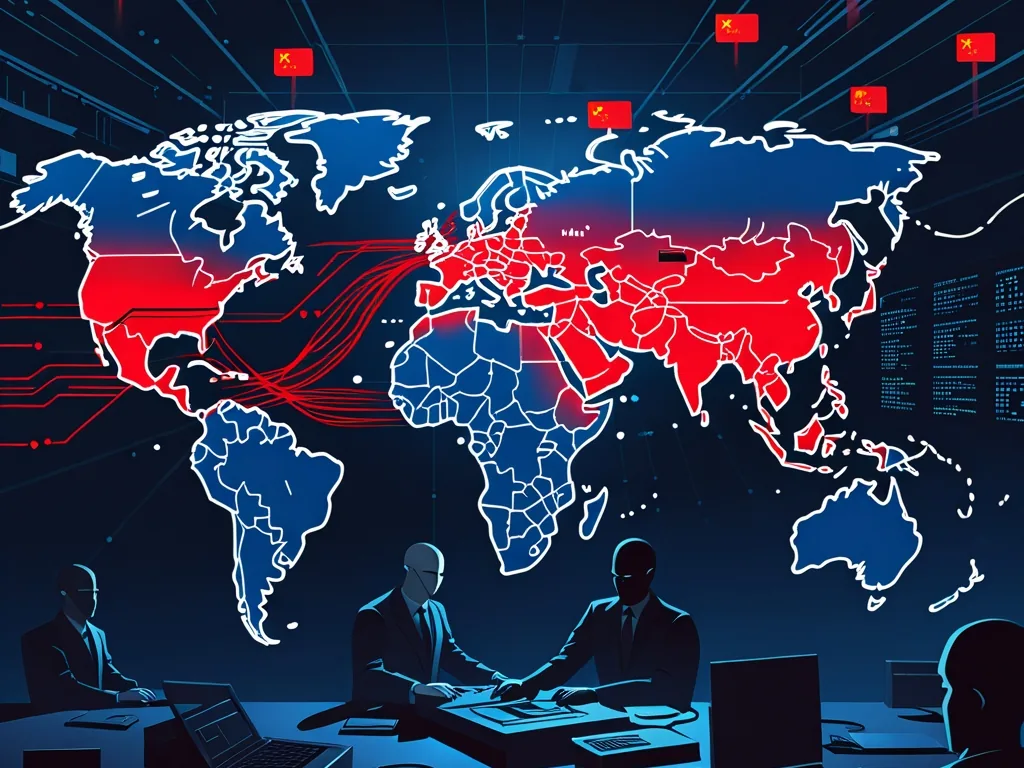
Imagine waking up to discover that your most valuable intellectual property - years of research and billions in investment - has been siphoned away through a technique so subtle you might never have noticed. Now imagine that happening not just to your company, but to an entire nation's technology sector. That is exactly what the US State Department alleges is happening right now, and they are taking the extraordinary step of warning the entire world about it.
On April 24, 2026, the State Department sent a classified diplomatic cable to embassies and consulates worldwide, ordering American diplomats to raise alarms about what the US government describes as widespread efforts by Chinese companies to steal AI intellectual property from American labs. The cable, seen by Reuters, specifically names three Chinese AI firms: DeepSeek, Moonshot AI, and MiniMax. The accusations could not come at a more sensitive time - just weeks before President Trump is scheduled to meet with Chinese President Xi Jinping in Beijing.
What Is Model Distillation and Why Should You Care
To understand why this matters, you need to understand model distillation. Think of it like this: training a large AI model from scratch is like building a Formula 1 race car from raw materials - it takes years, costs hundreds of millions of dollars, and requires massive computational resources. Model distillation is like taking that finished race car, studying exactly how it performs on the track, and building a nearly identical copy at a fraction of the cost.
In technical terms, distillation involves training smaller AI models using outputs from larger, more expensive ones. The smaller "student" model learns to mimic the behavior of the larger "teacher" model by studying its responses. The result is a model that appears to perform comparably on benchmarks but costs dramatically less to produce.
The State Department cable alleges something more sinister than simple competition. According to the document, Chinese firms are engaging in "surreptitious, unauthorized distillation campaigns" that do not just replicate capabilities - they deliberately strip away security protocols. The cable states these campaigns "deliberately strip security protocols from the resulting models and undo mechanisms that ensure those AI models are ideologically neutral and truth-seeking."
This is not just about economic competition. It is about creating AI systems that lack the safety guardrails American companies have spent years developing.
The DeepSeek Factor: From Underdog to Accused
DeepSeek has become the face of this controversy, though the company denies any wrongdoing. The startup burst onto the global stage last year when it released a low-cost AI model that stunned the industry with its performance. American tech stocks plunged on the news. How could a Chinese startup with limited resources build something competitive with models that cost billions to develop
OpenAI had an answer. In February 2026, Reuters reported that OpenAI had warned US lawmakers that DeepSeek was specifically targeting American AI companies to replicate their models for training purposes. The State Department's April 24 cable appears to validate those concerns and expand them to include Moonshot AI and MiniMax.
The timing of the State Department's warning is particularly notable because DeepSeek chose April 24 - the same day as the cable - to launch a preview of its highly anticipated V4 model. This new version is specifically adapted for Huawei chip technology, underlining China's growing technological autonomy in the AI sector. The message is clear: China is not just copying American technology - it is building its own parallel ecosystem.
The Chinese Embassy in Washington responded swiftly, calling the allegations "groundless" and "deliberate attacks on China's development and progress in the AI industry." DeepSeek has previously stated that its V3 model used only naturally occurring data collected through web crawling and had not intentionally used synthetic data generated by OpenAI.
Why This Is a Security Problem, Not Just an Economic One
The State Department cable goes beyond typical trade dispute language. It frames the issue as a national security concern with global implications. The document instructs diplomats to warn foreign counterparts about "the risks of utilizing AI models distilled from US proprietary AI models" and to "lay the groundwork for potential follow-up and outreach by the US government."
This suggests the US is preparing a coordinated international response that could include sanctions, export controls, or other restrictive measures.
The security implications are significant. When Chinese firms allegedly strip safety protocols from distilled models, they are not just creating cheaper alternatives - they are creating AI systems that may lack:
- Content moderation filters that prevent generation of harmful instructions
- Truthfulness constraints that reduce hallucinations and misinformation
- Bias mitigation systems designed to ensure fair and neutral outputs
- Security guardrails that prevent the models from being weaponized
For enterprises evaluating AI vendors, this creates a complex risk landscape. How do you know whether the AI model you are using was developed through legitimate means or through potentially compromised distillation
%22%2F%3E%0A%20%20%3Ccircle%20cx%3D%221270%22%20cy%3D%22180%22%20r%3D%22210%22%20fill%3D%22rgba(123%2C%20215%2C%20255%2C%200.18)%22%2F%3E%0A%20%20%3Ccircle%20cx%3D%22310%22%20cy%3D%22710%22%20r%3D%22250%22%20fill%3D%22rgba(52%2C%20211%2C%20153%2C%200.10)%22%2F%3E%0A%20%20%3Cpath%20d%3D%22M160%20708C340%20574%20498%20531%20653%20566C828%20605%20941%20504%201086%20418C1191%20355%201308%20317%201440%20332%22%20stroke%3D%22%237bd7ff%22%20stroke-width%3D%2210%22%20stroke-linecap%3D%22round%22%20opacity%3D%220.85%22%2F%3E%0A%20%20%3Cpath%20d%3D%22M160%20640H1440%22%20stroke%3D%22rgba(255%2C255%2C255%2C0.08)%22%20stroke-width%3D%222%22%2F%3E%0A%20%20%3Cpath%20d%3D%22M160%20298H1440%22%20stroke%3D%22rgba(255%2C255%2C255%2C0.08)%22%20stroke-width%3D%222%22%2F%3E%0A%20%20%3Crect%20x%3D%22160%22%20y%3D%22142%22%20width%3D%22174%22%20height%3D%2236%22%20rx%3D%2218%22%20fill%3D%22rgba(123%2C%20215%2C%20255%2C%200.18)%22%20stroke%3D%22%237bd7ff%22%2F%3E%0A%20%20%3Ctext%20x%3D%22247%22%20y%3D%22166%22%20text-anchor%3D%22middle%22%20fill%3D%22%23D9F4FF%22%20font-size%3D%2218%22%20font-family%3D%22Arial%2C%20Helvetica%2C%20sans-serif%22%20letter-spacing%3D%222%22%3EAI%20SECURITY%3C%2Ftext%3E%0A%20%20%3Ctext%20x%3D%22160%22%20y%3D%22392%22%20fill%3D%22%23F7FBFF%22%20font-size%3D%2266%22%20font-weight%3D%22700%22%20font-family%3D%22Arial%2C%20Helvetica%2C%20sans-serif%22%3EThe%20Geopolitical%20Context%3A%3C%2Ftext%3E%0A%20%20%3Ctext%20x%3D%22160%22%20y%3D%22470%22%20fill%3D%22%23F7FBFF%22%20font-size%3D%2266%22%20font-weight%3D%22700%22%20font-family%3D%22Arial%2C%20Helvetica%2C%20sans-serif%22%3ETech%20War%20Escalation%3C%2Ftext%3E%0A%20%20%3Ctext%20x%3D%22160%22%20y%3D%22554%22%20fill%3D%22%23A8B8C8%22%20font-size%3D%2228%22%20font-family%3D%22Arial%2C%20Helvetica%2C%20sans-serif%22%3EUS%20State%20Department%20Issues%20Global%20Alert%3A%3C%2Ftext%3E%0A%20%20%3Crect%20x%3D%221080%22%20y%3D%22420%22%20width%3D%22274%22%20height%3D%22182%22%20rx%3D%2222%22%20fill%3D%22%230E2231%22%20stroke%3D%22rgba(255%2C255%2C255%2C0.10)%22%2F%3E%0A%20%20%3Crect%20x%3D%221120%22%20y%3D%22458%22%20width%3D%22112%22%20height%3D%2218%22%20rx%3D%229%22%20fill%3D%22%237bd7ff%22%20opacity%3D%220.9%22%2F%3E%0A%20%20%3Crect%20x%3D%221120%22%20y%3D%22498%22%20width%3D%22180%22%20height%3D%2212%22%20rx%3D%226%22%20fill%3D%22rgba(255%2C255%2C255%2C0.2)%22%2F%3E%0A%20%20%3Crect%20x%3D%221120%22%20y%3D%22526%22%20width%3D%22146%22%20height%3D%2212%22%20rx%3D%226%22%20fill%3D%22rgba(255%2C255%2C255%2C0.14)%22%2F%3E%0A%20%20%3Crect%20x%3D%221120%22%20y%3D%22554%22%20width%3D%2288%22%20height%3D%2212%22%20rx%3D%226%22%20fill%3D%22rgba(255%2C255%2C255%2C0.12)%22%2F%3E%0A%20%20%3Ccircle%20cx%3D%221340%22%20cy%3D%22522%22%20r%3D%2244%22%20fill%3D%22rgba(123%2C%20215%2C%20255%2C%200.18)%22%20stroke%3D%22%237bd7ff%22%2F%3E%0A%20%20%3Cpath%20d%3D%22M1322%20522L1336%20536L1360%20506%22%20stroke%3D%22%237bd7ff%22%20stroke-width%3D%228%22%20stroke-linecap%3D%22round%22%20stroke-linejoin%3D%22round%22%2F%3E%0A%20%20%3Ctext%20x%3D%22160%22%20y%3D%22748%22%20fill%3D%22%237BD7FF%22%20font-size%3D%2222%22%20font-family%3D%22Arial%2C%20Helvetica%2C%20sans-serif%22%20letter-spacing%3D%223%22%3EHEXON%20%2F%2F%20SUPPORTING%20VISUAL%3C%2Ftext%3E%0A%3C%2Fsvg%3E)
The Geopolitical Context: Tech War Escalation
The State Department's global warning comes just weeks before a high-stakes diplomatic meeting. President Trump is scheduled to visit Beijing to meet with President Xi Jinping, and these accusations could significantly raise tensions in an already fraught relationship.
The US and China have been engaged in a long-running tech war that had shown signs of de-escalation following a detente brokered last October. The White House made similar accusations about Chinese AI theft earlier in the week, suggesting a coordinated campaign to build international pressure before the Trump-Xi summit.
Many Western and some Asian governments have already banned their institutions and officials from using DeepSeek, citing data privacy concerns. The State Department's cable appears designed to expand this isolation and create a unified front against Chinese AI companies.
The cable also mentioned that "a separate demarche request and message has been sent to Beijing for raising with China" - diplomatic language indicating formal protests at the highest levels.
What This Means for Enterprise AI Security
If you are a CISO or security leader, this development creates immediate practical challenges. Here is what you need to consider:
Supply Chain Verification Becomes Critical
The allegations highlight the importance of understanding where your AI models come from. If you are using AI services from vendors who may be using distilled models with stripped safety protocols, you are accepting risks that may not be apparent from standard security assessments.
Data Sovereignty Concerns
Many organizations have already banned DeepSeek over data privacy concerns - the company's data handling practices mean that anything you input could potentially be accessed by Chinese authorities. The State Department's warning suggests these concerns extend to the fundamental integrity of the models themselves.
Compliance Implications
If your organization operates in regulated industries, using AI models developed through potentially unauthorized distillation could create compliance risks. The US government's formal allegations may trigger additional scrutiny from regulators.
Vendor Due Diligence
You need to ask harder questions of your AI vendors. Where did their models come from What training data was used Are they using any components from Chinese AI companies that might be compromised
The Broader AI Security Landscape
This controversy highlights a fundamental tension in the AI industry. The same techniques that enable legitimate innovation - like model distillation for efficiency - can also be weaponized for intellectual property theft. The open-source nature of much AI research, while driving rapid progress, also creates vulnerabilities.
The State Department's intervention suggests that governments are increasingly viewing AI capabilities as strategic assets requiring protection. We are likely to see more export controls, investment restrictions, and international coordination around AI development.
For the cybersecurity community, this creates new categories of risk to manage. AI supply chain security is no longer just about data privacy - it is about model provenance, training integrity, and the potential for adversarial manipulation of AI systems at their foundation.
What Happens Next
The immediate fallout from the State Department's cable will likely include:
- Expanded bans on Chinese AI services in government and sensitive industries
- Increased scrutiny of AI vendor supply chains
- Potential sanctions against named Chinese companies
- Accelerated development of "trusted AI" frameworks and certifications
- Greater emphasis on domestically-developed or fully-audited AI systems
The Trump-Xi meeting in the coming weeks will be a critical inflection point. If the US and China cannot find common ground on AI governance, we may see a balkanization of the global AI ecosystem into competing spheres of influence - one centered on American technology, the other on Chinese alternatives.
%22%2F%3E%0A%20%20%3Ccircle%20cx%3D%221270%22%20cy%3D%22180%22%20r%3D%22210%22%20fill%3D%22rgba(167%2C%20139%2C%20250%2C%200.18)%22%2F%3E%0A%20%20%3Ccircle%20cx%3D%22310%22%20cy%3D%22710%22%20r%3D%22250%22%20fill%3D%22rgba(52%2C%20211%2C%20153%2C%200.10)%22%2F%3E%0A%20%20%3Cpath%20d%3D%22M160%20708C340%20574%20498%20531%20653%20566C828%20605%20941%20504%201086%20418C1191%20355%201308%20317%201440%20332%22%20stroke%3D%22%23a78bfa%22%20stroke-width%3D%2210%22%20stroke-linecap%3D%22round%22%20opacity%3D%220.85%22%2F%3E%0A%20%20%3Cpath%20d%3D%22M160%20640H1440%22%20stroke%3D%22rgba(255%2C255%2C255%2C0.08)%22%20stroke-width%3D%222%22%2F%3E%0A%20%20%3Cpath%20d%3D%22M160%20298H1440%22%20stroke%3D%22rgba(255%2C255%2C255%2C0.08)%22%20stroke-width%3D%222%22%2F%3E%0A%20%20%3Crect%20x%3D%22160%22%20y%3D%22142%22%20width%3D%22174%22%20height%3D%2236%22%20rx%3D%2218%22%20fill%3D%22rgba(167%2C%20139%2C%20250%2C%200.18)%22%20stroke%3D%22%23a78bfa%22%2F%3E%0A%20%20%3Ctext%20x%3D%22247%22%20y%3D%22166%22%20text-anchor%3D%22middle%22%20fill%3D%22%23D9F4FF%22%20font-size%3D%2218%22%20font-family%3D%22Arial%2C%20Helvetica%2C%20sans-serif%22%20letter-spacing%3D%222%22%3EAI%20SECURITY%3C%2Ftext%3E%0A%20%20%3Ctext%20x%3D%22160%22%20y%3D%22392%22%20fill%3D%22%23F7FBFF%22%20font-size%3D%2266%22%20font-weight%3D%22700%22%20font-family%3D%22Arial%2C%20Helvetica%2C%20sans-serif%22%3EFAQ%3A%20Understanding%20the%3C%2Ftext%3E%0A%20%20%3Ctext%20x%3D%22160%22%20y%3D%22470%22%20fill%3D%22%23F7FBFF%22%20font-size%3D%2266%22%20font-weight%3D%22700%22%20font-family%3D%22Arial%2C%20Helvetica%2C%20sans-serif%22%3EChinese%20AI%20Theft%20Allegations%3C%2Ftext%3E%0A%20%20%3Ctext%20x%3D%22160%22%20y%3D%22554%22%20fill%3D%22%23A8B8C8%22%20font-size%3D%2228%22%20font-family%3D%22Arial%2C%20Helvetica%2C%20sans-serif%22%3EUS%20State%20Department%20Issues%20Global%20Alert%3A%3C%2Ftext%3E%0A%20%20%3Crect%20x%3D%221080%22%20y%3D%22420%22%20width%3D%22274%22%20height%3D%22182%22%20rx%3D%2222%22%20fill%3D%22%230E2231%22%20stroke%3D%22rgba(255%2C255%2C255%2C0.10)%22%2F%3E%0A%20%20%3Crect%20x%3D%221120%22%20y%3D%22458%22%20width%3D%22112%22%20height%3D%2218%22%20rx%3D%229%22%20fill%3D%22%23a78bfa%22%20opacity%3D%220.9%22%2F%3E%0A%20%20%3Crect%20x%3D%221120%22%20y%3D%22498%22%20width%3D%22180%22%20height%3D%2212%22%20rx%3D%226%22%20fill%3D%22rgba(255%2C255%2C255%2C0.2)%22%2F%3E%0A%20%20%3Crect%20x%3D%221120%22%20y%3D%22526%22%20width%3D%22146%22%20height%3D%2212%22%20rx%3D%226%22%20fill%3D%22rgba(255%2C255%2C255%2C0.14)%22%2F%3E%0A%20%20%3Crect%20x%3D%221120%22%20y%3D%22554%22%20width%3D%2288%22%20height%3D%2212%22%20rx%3D%226%22%20fill%3D%22rgba(255%2C255%2C255%2C0.12)%22%2F%3E%0A%20%20%3Ccircle%20cx%3D%221340%22%20cy%3D%22522%22%20r%3D%2244%22%20fill%3D%22rgba(167%2C%20139%2C%20250%2C%200.18)%22%20stroke%3D%22%23a78bfa%22%2F%3E%0A%20%20%3Cpath%20d%3D%22M1322%20522L1336%20536L1360%20506%22%20stroke%3D%22%23a78bfa%22%20stroke-width%3D%228%22%20stroke-linecap%3D%22round%22%20stroke-linejoin%3D%22round%22%2F%3E%0A%20%20%3Ctext%20x%3D%22160%22%20y%3D%22748%22%20fill%3D%22%237BD7FF%22%20font-size%3D%2222%22%20font-family%3D%22Arial%2C%20Helvetica%2C%20sans-serif%22%20letter-spacing%3D%223%22%3EHEXON%20%2F%2F%20SUPPORTING%20VISUAL%3C%2Ftext%3E%0A%3C%2Fsvg%3E)
FAQ: Understanding the Chinese AI Theft Allegations
What exactly is model distillation
Model distillation is a technique where a smaller "student" AI model is trained to mimic the outputs of a larger "teacher" model. The student learns by studying the teacher's responses rather than being trained from scratch on raw data. This can produce capable models at a fraction of the cost but raises concerns when done without authorization.
Which Chinese companies are named in the State Department cable
The cable specifically names DeepSeek, Moonshot AI, and MiniMax as companies allegedly engaged in unauthorized distillation of US AI models.
What does the US allege these companies are doing wrong
The State Department claims these companies are not just copying capabilities through distillation but are deliberately stripping security protocols, safety guardrails, and mechanisms designed to ensure AI models are neutral and truth-seeking.
How has China responded to these accusations
The Chinese Embassy in Washington called the allegations "groundless" and "deliberate attacks on China's development." DeepSeek has previously denied intentionally using synthetic data from OpenAI models.
Is using DeepSeek or other Chinese AI services illegal
While not necessarily illegal for private use, many Western and Asian governments have banned official use of DeepSeek due to data privacy concerns. The State Department's allegations may lead to additional restrictions.
What should enterprises do to protect themselves
Organizations should conduct thorough vendor due diligence on AI providers, verify model provenance, implement data sovereignty controls, and consider the compliance implications of using potentially compromised AI systems.
What is the significance of the DeepSeek V4 launch timing
DeepSeek launched its V4 model preview on the same day as the State Department cable - April 24, 2026. The V4 is specifically adapted for Huawei chips, demonstrating China's push for technological independence from US hardware.
How does this affect the upcoming Trump-Xi meeting
The timing suggests the US is building international pressure before the summit. The allegations could significantly raise tensions and make a tech war de-escalation more difficult to achieve.
What are the security risks of using distilled models with stripped protocols
Such models may lack content moderation, truthfulness constraints, bias mitigation, and security guardrails. This could result in AI systems that generate harmful content, spread misinformation, or are more easily weaponized.
Will there be additional US actions beyond the diplomatic cable
The cable mentions "laying the groundwork for potential follow-up and outreach," suggesting additional measures such as sanctions, export controls, or coordinated international responses may follow.
The Bottom Line: A New Era of AI National Security
The State Department's global warning marks a significant escalation in how governments view AI capabilities. These are no longer just commercial products - they are strategic assets with national security implications. The allegations of systematic IP theft through model distillation, combined with deliberate stripping of safety protocols, suggest a form of technological warfare that the US is only beginning to confront.
For cybersecurity professionals, this creates an urgent need to expand AI governance frameworks. You need to think about AI supply chain security the same way you think about software supply chain security - with rigorous verification, continuous monitoring, and clear risk assessment. The models you deploy are only as trustworthy as their provenance.
The coming weeks will reveal whether this diplomatic offensive leads to meaningful international coordination on AI security or simply accelerates the fragmentation of the global technology ecosystem. Either way, the era of unchecked AI globalization appears to be ending. The question is what comes next - and whether organizations are prepared for a world where AI capabilities are increasingly viewed through a national security lens.
If you have not yet audited your AI vendor relationships and supply chains, now is the time. The geopolitical landscape is shifting rapidly, and the tools you rely on today may become compliance liabilities tomorrow. Do not wait for regulations to force your hand - proactive AI governance is now a fundamental security requirement.