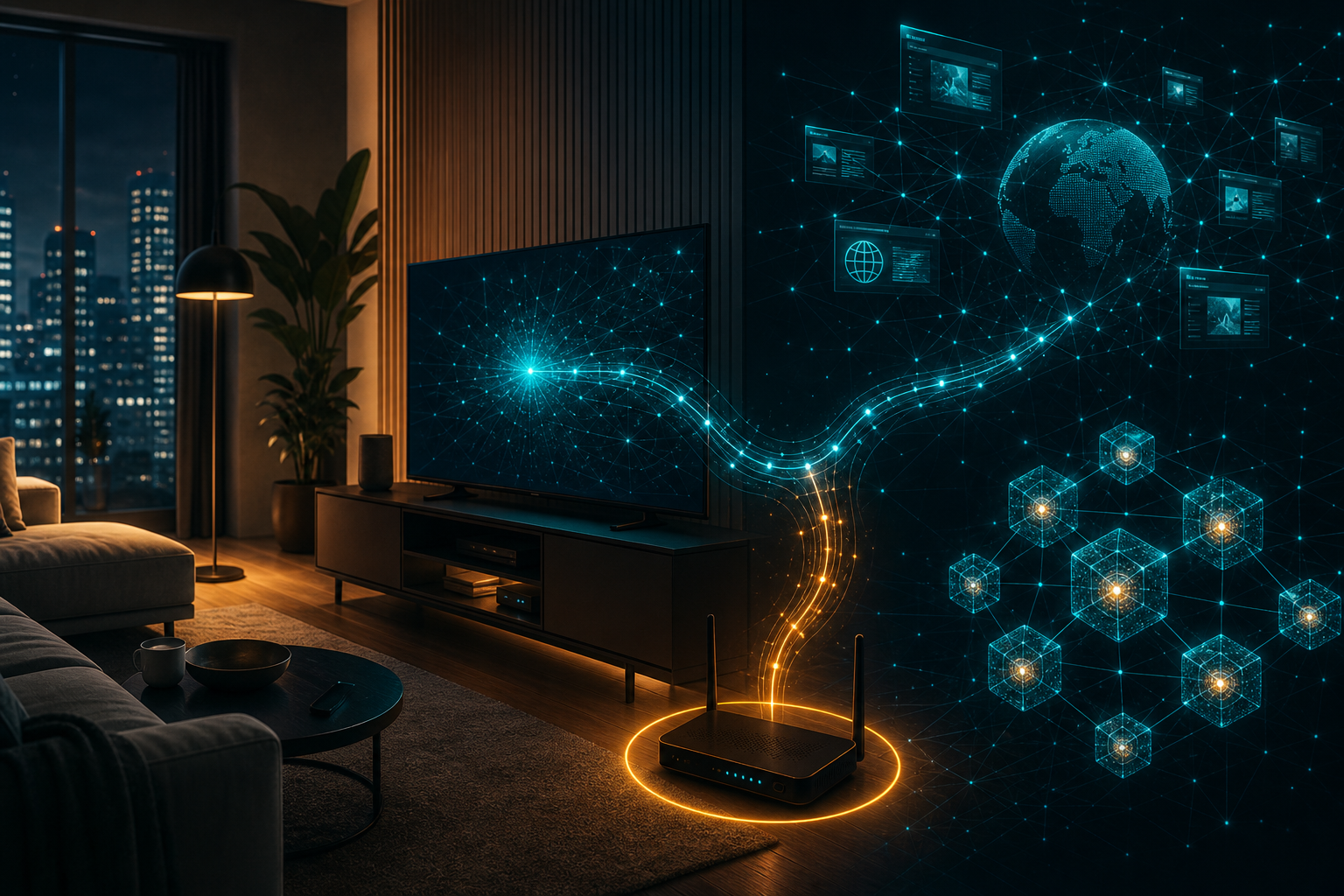
Smart TV web scraping for AI is no longer a weird edge case. Fresh research published on June 5, 2026 shows how free consumer apps can quietly turn connected TVs and home devices into residential proxy nodes that route web-scraping traffic for companies selling data access to the AI market.
That matters right now because the economics of AI scraping are colliding with the reality of anti-bot defenses. If model builders, search companies, and agent platforms cannot collect enough web data from ordinary cloud infrastructure, they look for traffic that appears human and residential instead. The uncomfortable part is where that traffic now comes from: not a datacenter, but someone's living room.
The new Include Security research puts technical detail behind a story that had mostly been discussed as a privacy oddity. Supporting The Hacker News coverage from June 6 makes the same point in plainer terms: free apps are becoming infrastructure.
If you work in security, privacy, ad tech, or product governance, that changes the discussion. This is no longer just about whether consumer devices collect too much telemetry. It is about whether ordinary household hardware is being repurposed into residential scraping infrastructure for AI.
Key Takeaway: The risk is not that your TV becomes "smart." The risk is that it becomes useful to someone else's data collection business while looking idle to you.
Why smart TV web scraping for AI matters now
The June 5 research is the real freshness hook here, not older debates about proxy networks and not generic concerns about AI companies scraping the web. Include Security documented how Bright Data's SDK model works, why connected TVs are unusually attractive proxy endpoints, and how public partner information and configuration details expose the business logic behind it.
That timing matters because AI demand is reshaping the proxy market. Modern sites increasingly block or throttle scraping from obvious cloud IP ranges, which means the easiest way to look like a real user is to borrow a real user's connection. Residential proxy networks solve that problem at scale.
This is where the story becomes bigger than one company. AI training, retrieval pipelines, search products, and agent grounding workflows all depend on large-scale content collection. When access gets harder, the incentive grows to route requests through hardware that looks normal, persistent, and hard to distinguish from legitimate household traffic.
Connected TVs fit that model almost perfectly. They are always plugged in, usually left on trusted home networks, rarely inspected closely, and far less likely than phones or laptops to have meaningful security tooling or active oversight.
Key Stat: Include Security says Bright Data markets a 400M+ residential IP network and describes a consent-sourced pool of 150M+ IPs, while one documented configuration set allowed up to 200 GB of monthly WiFi bandwidth use.
How the proxy model actually works
At a high level, the system is simple. A free app embeds an SDK. The user is shown some version of a consent screen. Once enabled, the device can act as an exit node for web requests initiated by an external customer of the proxy platform.
That design pushes the hard part of scraping onto the household network. To the destination site, the traffic does not look like it came from a bot running in a commercial cloud region. It looks like it came from a residential subscriber with an ordinary ISP connection.
The June 5 report is useful because it gets past vague marketing language and into mechanics. It describes public configuration endpoints, partner listings, traffic behavior, and platform support details that make the residential-proxy model concrete instead of theoretical.
Why smart TVs are such attractive proxy endpoints
Phones are limited. They move between networks, drain batteries, get locked, and attract more attention from users, mobile EDR, and device-management controls. Smart TVs do the opposite.
For a proxy operator, a connected TV offers several advantages:
- It is typically plugged in all day.
- It usually sits on stable home WiFi.
- It often has effectively unmetered bandwidth.
- It gets less user scrutiny than a phone or laptop.
- It is poorly positioned for meaningful consent review.
That last point is easy to underestimate. A disclosure that might already be weak on a phone becomes even weaker on a TV where legal text is navigated with a remote and users are trying to watch content, not audit traffic monetization terms.
The "public web data" framing hides the real issue
Proxy-network defenders often lean on a narrow argument: the traffic only fetches public data, not private account content. Even if that were always true, it would not resolve the core security and trust problem.
The question is not just what data gets fetched. The question is whose identity, bandwidth, reputation, and exposure are attached to the request. Once a household IP is used as an exit point for someone else's scraping, the home connection becomes part of the operational chain whether the user understands that or not.
That should sound familiar to anyone tracking the broader AI supply chain security guide problem. The same pattern keeps repeating: a useful external dependency gets normalized before teams or users understand the blast radius around it.
%22%2F%3E%0A%20%20%3Ccircle%20cx%3D%221270%22%20cy%3D%22180%22%20r%3D%22210%22%20fill%3D%22rgba(123%2C%20215%2C%20255%2C%200.18)%22%2F%3E%0A%20%20%3Ccircle%20cx%3D%22310%22%20cy%3D%22710%22%20r%3D%22250%22%20fill%3D%22rgba(52%2C%20211%2C%20153%2C%200.10)%22%2F%3E%0A%20%20%3Cpath%20d%3D%22M160%20708C340%20574%20498%20531%20653%20566C828%20605%20941%20504%201086%20418C1191%20355%201308%20317%201440%20332%22%20stroke%3D%22%237bd7ff%22%20stroke-width%3D%2210%22%20stroke-linecap%3D%22round%22%20opacity%3D%220.85%22%2F%3E%0A%20%20%3Cpath%20d%3D%22M160%20640H1440%22%20stroke%3D%22rgba(255%2C255%2C255%2C0.08)%22%20stroke-width%3D%222%22%2F%3E%0A%20%20%3Cpath%20d%3D%22M160%20298H1440%22%20stroke%3D%22rgba(255%2C255%2C255%2C0.08)%22%20stroke-width%3D%222%22%2F%3E%0A%20%20%3Crect%20x%3D%22160%22%20y%3D%22142%22%20width%3D%22174%22%20height%3D%2236%22%20rx%3D%2218%22%20fill%3D%22rgba(123%2C%20215%2C%20255%2C%200.18)%22%20stroke%3D%22%237bd7ff%22%2F%3E%0A%20%20%3Ctext%20x%3D%22247%22%20y%3D%22166%22%20text-anchor%3D%22middle%22%20fill%3D%22%23D9F4FF%22%20font-size%3D%2218%22%20font-family%3D%22Arial%2C%20Helvetica%2C%20sans-serif%22%20letter-spacing%3D%222%22%3EAI%20SECURITY%3C%2Ftext%3E%0A%20%20%3Ctext%20x%3D%22160%22%20y%3D%22392%22%20fill%3D%22%23F7FBFF%22%20font-size%3D%2266%22%20font-weight%3D%22700%22%20font-family%3D%22Arial%2C%20Helvetica%2C%20sans-serif%22%3EWhy%20the%20consent%20story%20is%3C%2Ftext%3E%0A%20%20%3Ctext%20x%3D%22160%22%20y%3D%22470%22%20fill%3D%22%23F7FBFF%22%20font-size%3D%2266%22%20font-weight%3D%22700%22%20font-family%3D%22Arial%2C%20Helvetica%2C%20sans-serif%22%3Eweaker%20than%20it%20looks%3C%2Ftext%3E%0A%20%20%3Ctext%20x%3D%22160%22%20y%3D%22554%22%20fill%3D%22%23A8B8C8%22%20font-size%3D%2228%22%20font-family%3D%22Arial%2C%20Helvetica%2C%20sans-serif%22%3ESmart%20TV%20Web%20Scraping%20for%20AI%3A%20Why%20Free%3C%2Ftext%3E%0A%20%20%3Crect%20x%3D%221080%22%20y%3D%22420%22%20width%3D%22274%22%20height%3D%22182%22%20rx%3D%2222%22%20fill%3D%22%230E2231%22%20stroke%3D%22rgba(255%2C255%2C255%2C0.10)%22%2F%3E%0A%20%20%3Crect%20x%3D%221120%22%20y%3D%22458%22%20width%3D%22112%22%20height%3D%2218%22%20rx%3D%229%22%20fill%3D%22%237bd7ff%22%20opacity%3D%220.9%22%2F%3E%0A%20%20%3Crect%20x%3D%221120%22%20y%3D%22498%22%20width%3D%22180%22%20height%3D%2212%22%20rx%3D%226%22%20fill%3D%22rgba(255%2C255%2C255%2C0.2)%22%2F%3E%0A%20%20%3Crect%20x%3D%221120%22%20y%3D%22526%22%20width%3D%22146%22%20height%3D%2212%22%20rx%3D%226%22%20fill%3D%22rgba(255%2C255%2C255%2C0.14)%22%2F%3E%0A%20%20%3Crect%20x%3D%221120%22%20y%3D%22554%22%20width%3D%2288%22%20height%3D%2212%22%20rx%3D%226%22%20fill%3D%22rgba(255%2C255%2C255%2C0.12)%22%2F%3E%0A%20%20%3Ccircle%20cx%3D%221340%22%20cy%3D%22522%22%20r%3D%2244%22%20fill%3D%22rgba(123%2C%20215%2C%20255%2C%200.18)%22%20stroke%3D%22%237bd7ff%22%2F%3E%0A%20%20%3Cpath%20d%3D%22M1322%20522L1336%20536L1360%20506%22%20stroke%3D%22%237bd7ff%22%20stroke-width%3D%228%22%20stroke-linecap%3D%22round%22%20stroke-linejoin%3D%22round%22%2F%3E%0A%20%20%3Ctext%20x%3D%22160%22%20y%3D%22748%22%20fill%3D%22%237BD7FF%22%20font-size%3D%2222%22%20font-family%3D%22Arial%2C%20Helvetica%2C%20sans-serif%22%20letter-spacing%3D%223%22%3EHEXON%20%2F%2F%20SUPPORTING%20VISUAL%3C%2Ftext%3E%0A%3C%2Fsvg%3E)
Why the consent story is weaker than it looks
The most charitable defense of this ecosystem is that users opted in. The June 5 research is a good reminder that consent is not automatically meaningful just because a button was tapped.
In the documented examples, the user-facing language emphasized occasional use of spare resources and public data collection. That wording is technically calming. It is also strategically selective. It does not help most people understand that a paying customer could route scraping activity through their home IP as part of a much larger proxy business.
That is the real gap. The consent surface is designed around legal cover, not informed mental models.
On a connected TV, that gap gets worse:
- The interface is bad for careful review.
- The user expectation is entertainment, not network monetization.
- Household members may not know who accepted the prompt.
- Parents, roommates, or IT staff often have little visibility afterward.
Common Mistake: Treating "the user clicked yes" as the end of the security conversation. In practice, meaningful consent depends on clarity, context, revocability, and an honest explanation of how the device will be used.
This is why the story overlaps with earlier Hexon.bot coverage of malicious AI browser extensions. The delivery mechanism is different, but the trust failure is similar: software presents itself as convenience while quietly expanding its role into monitoring, monetization, or infrastructure.
What this means for enterprises, publishers, and the open web
It is tempting to treat this as a consumer-device story only. That would be too narrow.
Enterprises are exposed in at least three ways. First, employees use smart TVs and ad-supported apps on the same home networks where they also work remotely. Second, brands and publishers may unknowingly participate in ecosystems that monetize user connectivity more aggressively than their policies or product teams realize. Third, defenders increasingly need to distinguish benign household traffic from proxy-mediated automated collection.
There is also a broader web-governance problem here. Anti-bot tooling pushed scrapers away from datacenters. That did not remove the scraping demand. It redistributed the collection layer onto residential infrastructure that is harder to classify and easier to externalize onto consumers.
In other words, AI demand is not just changing how much data gets collected. It is changing who absorbs the operational cost of collection.
That is one reason this topic deserves attention alongside shadow AI security risks. Shadow AI is not only about employees using unapproved copilots. It is also about invisible AI-adjacent dependencies operating below the level where most organizations think to look.
The attribution problem gets messier
Security teams already struggle with noisy residential traffic, bot detection, and abuse attribution. Proxy-mediated scraping makes that worse.
If requests come from ordinary household IPs, the target service has fewer reliable signals to separate real people from industrialized collection. That can create false positives, frustrate fraud controls, and raise policy questions for platforms trying to distinguish scraping, browsing, automation, and resale.
The result is a subtle shift in burden. Instead of collecting data in a place built for accountability, some scraping demand now rides through environments built for convenience.
%22%2F%3E%0A%20%20%3Ccircle%20cx%3D%221270%22%20cy%3D%22180%22%20r%3D%22210%22%20fill%3D%22rgba(167%2C%20139%2C%20250%2C%200.18)%22%2F%3E%0A%20%20%3Ccircle%20cx%3D%22310%22%20cy%3D%22710%22%20r%3D%22250%22%20fill%3D%22rgba(52%2C%20211%2C%20153%2C%200.10)%22%2F%3E%0A%20%20%3Cpath%20d%3D%22M160%20708C340%20574%20498%20531%20653%20566C828%20605%20941%20504%201086%20418C1191%20355%201308%20317%201440%20332%22%20stroke%3D%22%23a78bfa%22%20stroke-width%3D%2210%22%20stroke-linecap%3D%22round%22%20opacity%3D%220.85%22%2F%3E%0A%20%20%3Cpath%20d%3D%22M160%20640H1440%22%20stroke%3D%22rgba(255%2C255%2C255%2C0.08)%22%20stroke-width%3D%222%22%2F%3E%0A%20%20%3Cpath%20d%3D%22M160%20298H1440%22%20stroke%3D%22rgba(255%2C255%2C255%2C0.08)%22%20stroke-width%3D%222%22%2F%3E%0A%20%20%3Crect%20x%3D%22160%22%20y%3D%22142%22%20width%3D%22174%22%20height%3D%2236%22%20rx%3D%2218%22%20fill%3D%22rgba(167%2C%20139%2C%20250%2C%200.18)%22%20stroke%3D%22%23a78bfa%22%2F%3E%0A%20%20%3Ctext%20x%3D%22247%22%20y%3D%22166%22%20text-anchor%3D%22middle%22%20fill%3D%22%23D9F4FF%22%20font-size%3D%2218%22%20font-family%3D%22Arial%2C%20Helvetica%2C%20sans-serif%22%20letter-spacing%3D%222%22%3EAI%20SECURITY%3C%2Ftext%3E%0A%20%20%3Ctext%20x%3D%22160%22%20y%3D%22392%22%20fill%3D%22%23F7FBFF%22%20font-size%3D%2266%22%20font-weight%3D%22700%22%20font-family%3D%22Arial%2C%20Helvetica%2C%20sans-serif%22%3EWhat%20security%20and%20privacy%3C%2Ftext%3E%0A%20%20%3Ctext%20x%3D%22160%22%20y%3D%22470%22%20fill%3D%22%23F7FBFF%22%20font-size%3D%2266%22%20font-weight%3D%22700%22%20font-family%3D%22Arial%2C%20Helvetica%2C%20sans-serif%22%3Eteams%20should%20do%20next%3C%2Ftext%3E%0A%20%20%3Ctext%20x%3D%22160%22%20y%3D%22554%22%20fill%3D%22%23A8B8C8%22%20font-size%3D%2228%22%20font-family%3D%22Arial%2C%20Helvetica%2C%20sans-serif%22%3ESmart%20TV%20Web%20Scraping%20for%20AI%3A%20Why%20Free%3C%2Ftext%3E%0A%20%20%3Crect%20x%3D%221080%22%20y%3D%22420%22%20width%3D%22274%22%20height%3D%22182%22%20rx%3D%2222%22%20fill%3D%22%230E2231%22%20stroke%3D%22rgba(255%2C255%2C255%2C0.10)%22%2F%3E%0A%20%20%3Crect%20x%3D%221120%22%20y%3D%22458%22%20width%3D%22112%22%20height%3D%2218%22%20rx%3D%229%22%20fill%3D%22%23a78bfa%22%20opacity%3D%220.9%22%2F%3E%0A%20%20%3Crect%20x%3D%221120%22%20y%3D%22498%22%20width%3D%22180%22%20height%3D%2212%22%20rx%3D%226%22%20fill%3D%22rgba(255%2C255%2C255%2C0.2)%22%2F%3E%0A%20%20%3Crect%20x%3D%221120%22%20y%3D%22526%22%20width%3D%22146%22%20height%3D%2212%22%20rx%3D%226%22%20fill%3D%22rgba(255%2C255%2C255%2C0.14)%22%2F%3E%0A%20%20%3Crect%20x%3D%221120%22%20y%3D%22554%22%20width%3D%2288%22%20height%3D%2212%22%20rx%3D%226%22%20fill%3D%22rgba(255%2C255%2C255%2C0.12)%22%2F%3E%0A%20%20%3Ccircle%20cx%3D%221340%22%20cy%3D%22522%22%20r%3D%2244%22%20fill%3D%22rgba(167%2C%20139%2C%20250%2C%200.18)%22%20stroke%3D%22%23a78bfa%22%2F%3E%0A%20%20%3Cpath%20d%3D%22M1322%20522L1336%20536L1360%20506%22%20stroke%3D%22%23a78bfa%22%20stroke-width%3D%228%22%20stroke-linecap%3D%22round%22%20stroke-linejoin%3D%22round%22%2F%3E%0A%20%20%3Ctext%20x%3D%22160%22%20y%3D%22748%22%20fill%3D%22%237BD7FF%22%20font-size%3D%2222%22%20font-family%3D%22Arial%2C%20Helvetica%2C%20sans-serif%22%20letter-spacing%3D%223%22%3EHEXON%20%2F%2F%20SUPPORTING%20VISUAL%3C%2Ftext%3E%0A%3C%2Fsvg%3E)
What security and privacy teams should do next
No single control will solve this. But the right response is clearer than a generic "be aware" warning.
1. Treat proxy monetization SDKs like supply chain risk
If your organization ships consumer apps, connected-TV software, ad-supported utilities, or embedded partners, review SDKs for more than just crash telemetry, attribution, or ad behavior. Ask whether any library can route third-party traffic, expose device bandwidth, or turn the endpoint into a relay.
This belongs in the same review bucket as privileged browser extensions, background updaters, and embedded payment SDKs. It is a trust-boundary decision, not a minor product toggle.
2. Add consumer-device privacy review to AI governance
AI governance programs often focus on model outputs, retrieval quality, prompt logging, and data access. That is necessary but incomplete. Teams should also review where AI data collection gets its network cover and whether the collection model depends on third-party residential infrastructure.
That governance discipline is becoming part of the same control story as AI agent visibility. If you do not know which external systems are quietly extending your AI ecosystem, you do not really know your AI attack surface.
3. Ask sharper vendor questions
For app vendors, OTT partners, and connected-device providers, the right due-diligence questions are blunt:
- Does this app or SDK route third-party web traffic through end-user devices?
- What bandwidth limits, platform permissions, and revocation controls exist?
- How is consent presented, and can it be independently audited?
- Which partners or customers can use the proxy capacity?
- What abuse handling exists if residential IPs are flagged?
If the answers are vague, the risk is not well-contained.
4. Give users an off-ramp that is real
Opt-out mechanisms buried in privacy settings are not enough. If an app monetizes household connectivity, the control should be clear, reversible, and visible where the feature is enabled.
That is not just a UX preference. It is the difference between nominal permission and defensible consent.
Pro Tip: If your product, vendor, or partner ever describes residential proxy use as "occasional background activity," ask for the actual bandwidth budgets, platform list, and traffic controls before you treat that description as truthful enough.
The strategic takeaway for AI security
The June 5 Include Security report matters because it shows where AI infrastructure is starting to hide. Not in exotic model weights or frontier agent sandboxes this time, but in ordinary consumer software distribution and idle household hardware.
That makes this story unusually relevant to security leaders. It links AI demand, supply chain trust, consent design, and network abuse into one operational picture. It also undercuts the lazy assumption that AI data collection is mostly a cloud-scale issue happening far away from end users.
The infrastructure is getting closer to people, closer to homes, and closer to devices that were never mentally categorized as part of the AI economy.
That should change how teams think about "just a free app" on a smart TV. It might not just be an app. It might be a quietly rented network edge.
Final takeaway
The freshest durable hook here is the June 5, 2026 Include Security report documenting how connected TVs and other consumer devices can be turned into residential proxy nodes for AI-driven web scraping. June 6 coverage helped surface the story, but the important disclosure date is still June 5.
The lesson is bigger than Bright Data. As AI companies, search providers, and data brokers fight for more usable web content, the scraping economy is pushing into places users rarely inspect and product teams often under-explain. If security leaders want to understand where AI risk shows up next, they should watch not only the models and agents, but the hidden infrastructure quietly built around them.