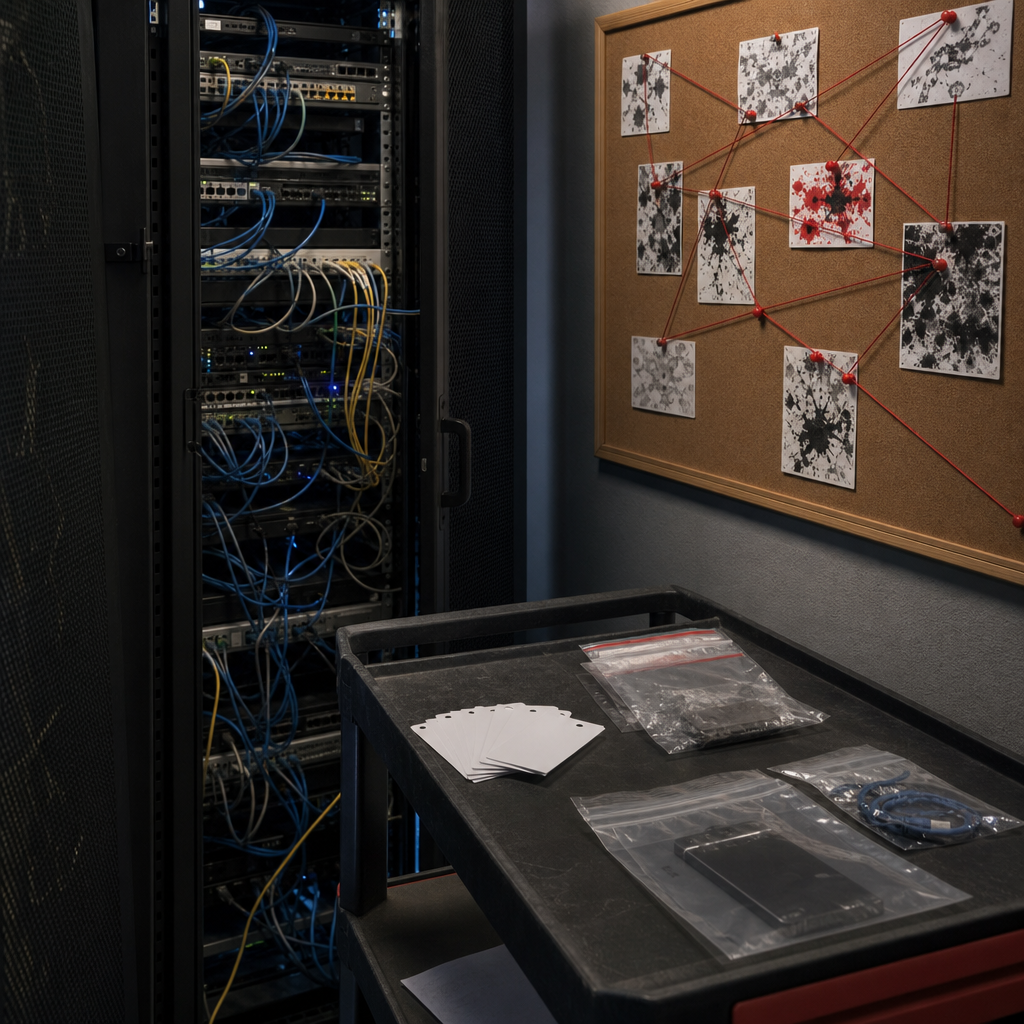
The Ruflo MCP flaw became a same-day publishable security story on July 29, 2026, when The Hacker News reported that a default Ruflo deployment could let an unauthenticated attacker reach powerful agent tools over the network. That is the freshness gate for this post. Older advisory and release material help explain the mechanics, but the July 29 public report is what makes the story live now.
What makes this incident worth your attention is not only the remote code execution path. The more durable lesson is that one exposed bridge could let an attacker steal model-provider keys, read stored conversations, and poison the system's persistent learning store so future AI outputs stay influenced after the initial intrusion.
Key Stat: The July 29 reporting says the vulnerable Ruflo bridge exposed 233 tools, including shell execution, database actions, agent management, and memory storage, to any network-reachable attacker on affected default deployments.
Why the Ruflo MCP flaw matters now
This is not just another open-port-plus-bad-auth story.
The Ruflo MCP flaw matters because it sits at the intersection of three security failures that keep recurring in agent systems:
- a high-authority tool surface
- weak default exposure
- persistent AI state that survives the first compromise
Ruflo, previously known as Claude Flow, is positioned as an agent meta-harness for coordinating swarms, workflows, and model-connected operations. That means the bridge does not just expose a narrow admin function. It exposes a control layer that can call tools, execute commands, access provider credentials, and shape how the system behaves later.
This is why the story lands differently from Hexon's earlier coverage of clean GitHub repo abuse against coding agents, Anthropic's in-workflow security controls, and the Amazon Q workspace trust problem. Those posts were about trust decisions during setup, development, or repository handling. The Ruflo case is about what happens when the orchestration layer itself is reachable and under-protected.
Key Takeaway: If an agent harness exposes command execution and memory controls over a network path, you are not protecting a convenience feature. You are protecting a control plane.
How the Ruflo MCP flaw actually worked
The public write-up and vendor advisory line up on the central issue.
According to The Hacker News and Ruflo's own GitHub advisory, versions before 3.16.3 shipped a default docker-compose deployment that bound the MCP bridge on port 3001 to 0.0.0.0. In practice, that meant the bridge could be reachable on all network interfaces unless firewalling or segmentation limited it elsewhere.
The request path was unauthenticated
The exposed bridge accepted POST requests on the main MCP endpoints without authentication in the vulnerable default deployment. That is the kind of mistake that immediately changes your threat model from malicious insider or trusted user to anyone who can reach the service.
The tool gate was incomplete
Ruflo had a blocklist mention around terminal execution, but the vendor advisory says that logic was effectively enforced only in the autopilot flow. Direct MCP requests bypassed that control. Once that happened, the attacker did not need a subtle AI prompt trick. They could invoke tools directly.
The bridge led to more than a shell
Remote code execution is already bad. In this case it was also a gateway.
The GitHub advisory says an attacker could:
- obtain a shell inside the bridge container
- read provider API keys from environment variables
- access or tamper with MongoDB-backed data
- spawn attacker-controlled swarms on the victim's keys
- write poisoned patterns into the AgentDB learning store
That last point is what turns this from a normal container exposure into an AI-system integrity story.
Common Mistake: Teams often treat the AI memory layer like a product feature. If it stores durable instructions, learned patterns, or behavioral steering material, it is also a persistence layer.
Why AI memory poisoning is the part defenders should not underrate
Most headlines will focus on remote code execution because it is familiar and easy to score.
That is understandable, but incomplete.
Ruflo's advisory explicitly warns that a patched redeploy does not automatically undo poisoned entries in the AgentDB pattern store. In other words, the exploit path was not only about getting in. It could also change what the system remembers and how it responds later.
That creates a nastier cleanup problem than many teams expect.
If you rotate keys and rebuild containers but leave attacker-written memory or pattern entries intact, you may still be carrying compromised behavior forward into future sessions. The next user may interact with a system that appears healthy while hidden steering material is still shaping tool choices, outputs, or workflow recommendations.
This is one reason the incident fits the broader warning from Hexon's recent AI agent scoring post and even the governance argument in the Open Secure AI Alliance coverage. AI systems need controls around execution, but they also need controls around persistence, inspectability, and cleanup.
Pro Tip: Treat persistent agent memory like a database that can hold adversarial state, not like a harmless convenience cache. Audit, diff, and purge it during incident response.
Where teams will miss the exposure
The published vulnerability details are clear enough that defenders should not reduce this to just update Ruflo.
The more realistic failure mode is operational complacency around the surrounding environment.
Here is where teams tend to miss the risk:
- they assume a Docker deployment is private because it is containerized
- they expose agent services during testing and forget to tighten them later
- they leave model-provider keys in environment variables with broad privileges
- they do not treat AI memory stores as high-value incident-response evidence
- they patch the package but do not rotate keys or inspect persistence
This is especially dangerous in teams that moved quickly from experimentation to production-like agent workflows. A harness may start life as an internal productivity layer, then quietly gain access to code, documents, model budgets, external tools, and team conversations. Once that happens, the bridge around it deserves the same discipline you would apply to an internal admin API.
That is the practical difference between a toy AI workflow and an enterprise one. Real harnesses accumulate authority faster than their operators update the threat model.
What to do in the next 24 hours
If your team uses Ruflo or a similar agent harness, there is a short response list that matters more than perfect theory.
1. Identify exposed instances immediately
Find every Ruflo deployment, especially anything built from old default Docker Compose patterns. If port 3001 or 27017 was network reachable outside a tightly controlled path, treat the instance as exposed until proven otherwise.
2. Upgrade, but do not stop there
Ruflo's v3.16.3 security release changes the defaults in the right direction. It binds the bridge to loopback by default, requires stronger controls for public binding, adds bearer-token auth, and gates terminal execution server-side. Apply the fix, but treat it as the start of remediation, not the end.
3. Rotate every provider key the instance touched
The vendor guidance is explicit here. Rotate OpenAI, Anthropic, Google, OpenRouter, and any other provider credentials or service tokens the container could access. If the bridge was exposed, assume the environment was readable.
4. Audit and purge poisoned memory
This is the step many teams will skip.
Inspect the AgentDB pattern store and any related memory entries for unexpected or attacker-written patterns. A clean redeploy does not erase compromised behavioral state that was already persisted.
5. Rebuild from clean images and review logs
Do not trust the old container blindly. Rebuild from clean images, review database changes, and inspect logs for suspicious tool calls, unusual task spawning, or unexplained outbound traffic.
Key Takeaway: A full Ruflo response means patching the software, rotating secrets, auditing memory, and rebuilding trust in the runtime. Doing only the first step leaves real risk behind.
What better agent harness security should look like
The Ruflo incident is also useful because it points to a better baseline for agent infrastructure.
First, powerful bridges should bind to loopback or private management paths by default. Public reachability should require explicit opt-in, not happen by accident because a sample compose file was convenient.
Second, authorization checks need to live on the server side and apply consistently across every execution path. A control that exists only in one workflow branch is not a reliable control.
Third, high-risk tools such as shell execution should be separately gated, minimized, and auditable. If the harness can launch commands, that capability should be treated like privileged admin access.
Fourth, persistent AI memory needs its own security model. Teams should know:
- where memory is stored
- who can write to it
- how entries are reviewed
- how poisoning is detected
- how to roll back to a known-good state
Finally, defenders should review the harness, not only the model brand attached to it. This has been one of the clearest lessons across AI security stories in 2026. The dangerous boundary is often not the model itself. It is the layer that gives the model tools, persistence, and network reach.
Final takeaway
The Ruflo MCP flaw is a strong example of how AI infrastructure failures are maturing. This was not a theoretical alignment debate or a speculative jailbreak. It was a concrete control-plane problem: an exposed bridge, missing authentication, reachable command execution, exposed keys, and a persistence layer that could keep the compromise alive in subtler ways.
The July 29 report is fresh because it brought those details into public view today. The deeper lesson will last longer. If your agent platform can execute tools, store memory, and coordinate workflows, then its bridge, defaults, and cleanup model all belong inside your serious security perimeter.
If you want one practical next step, start by inventorying every agent harness that can reach tools or memory, then verify which ones are network reachable, what secrets they hold, and how you would prove their persistent state is clean after an incident. That is the real operational question this story puts on the table.